

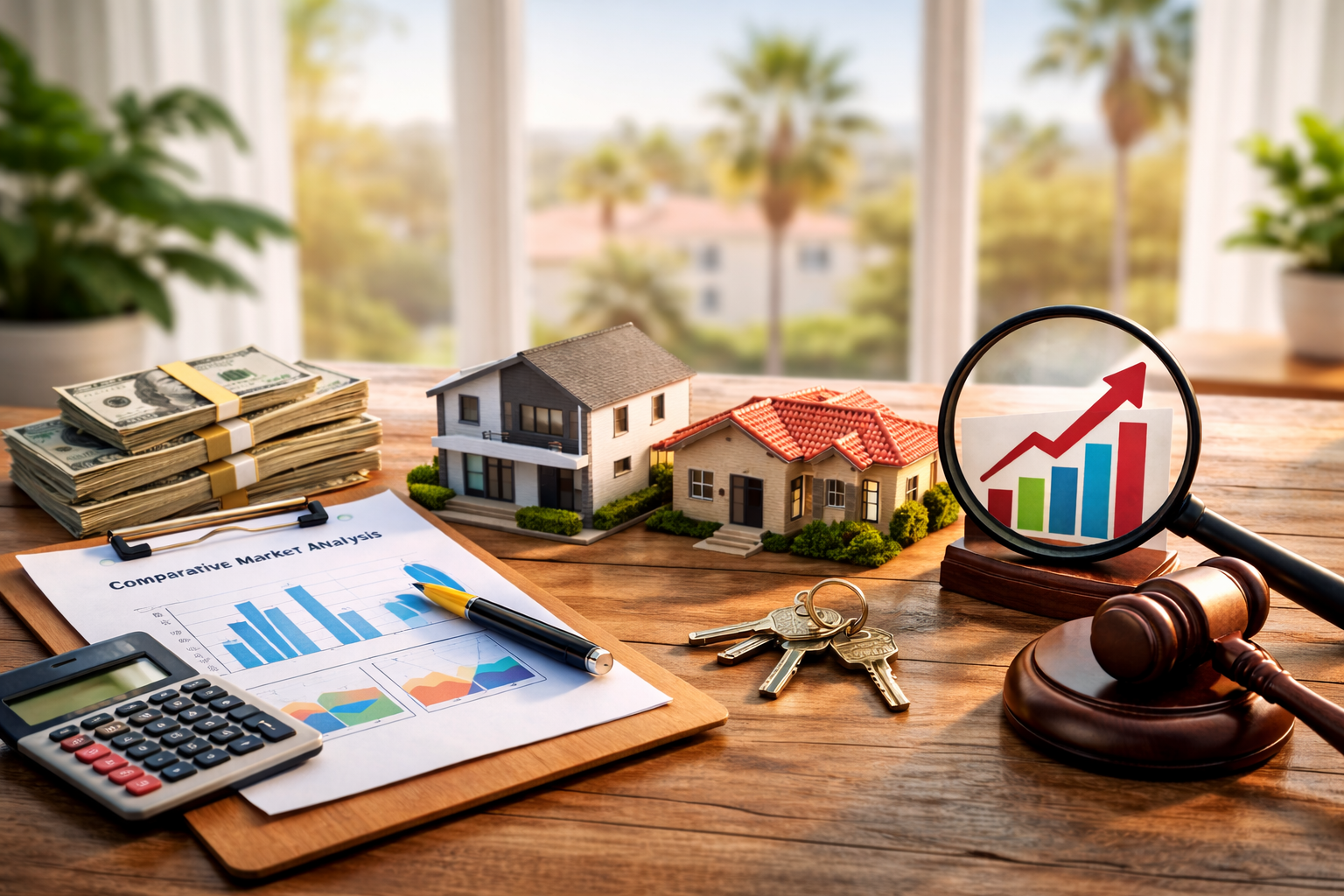
Santa Monica’s real estate market is famously competitive and high-value. In early 2026, median home prices hover around $1.5–$1.8 million, with a wide range depending on location. Active inventory is limited (only a few hundred homes listed citywide), so well-priced properties often attract multiple offers. Given this demand, pricing your home right from the start is crucial. An accurate price will generate showings and offers, while an overpriced listing can languish with little interest. This guide walks you through proven steps, from comparative market analysis to appraisal, market trends, and smart pricing tactics, so you can set the right home price and sell quickly in Santa Monica.
Understanding Your Santa Monica Market
Santa Monica is not just one homogenous market; it’s a patchwork of micro-markets, each with its own pricing and appeal. For example, homes north of Montana Avenue (90402) or in Sunset Park (90405) command multi-million prices, while properties inland or on busy streets may sit closer to $1.5–$2M. Median single-family prices range from roughly $1.6M in 90404/90405 up to $4–6M+ in the most coveted North of Montana areas. Key location factors drive these differences: proximity to the beach, walkability (to Montana Ave shops, Main Street, etc.), view, and school zones all add value. For instance, homes within 6–7 blocks of Ocean Avenue fetch premiums, and top-rated school zones (Franklin, Roosevelt, McKinley, Grant) see extra demand.
When you’re checking homes for sale in Santa Monica, CA, notice how much prices jump from one block to the next. A quiet street in Sunset Park might list at $2M, while two blocks south a similar house could go for $1.4M if it’s adjacent to a busy road. Buyers here pay large lot-value premiums; a bigger, usable lot north of Montana or a property with ADU potential will outprice a smaller lot, even if the house square footage is similar. Thus, you must evaluate your home’s specific factors: lot size and shape, zoning (R1, R2, etc.), views (ocean, city), and even orientation (sun exposure).
Location and lifestyle: Areas near Palisades Park, Montana Avenue shops, Main Street, or the beach are highly desirable and sell faster. Homes in Downtown Santa Monica (90401) tend to be condos or townhomes, while 90403 (Ocean Park/SMC border) is sought for its eclectic vibe and schools. Even street-level details matter: a greenbelt vs. a busy thoroughfare, a corner lot vs. an interior lot, can mean tens of thousands in value differences. All these factors underline the importance of being hyper-local: Santa Monica values must be gauged street by street, not just by zip code.
Perform a Comparative Market Analysis (CMA)
The first step in setting the right home price is a comparative market analysis (CMA). A CMA looks at recent sales of similar homes nearby and uses that data to estimate your property’s value. Appraisers and agents typically use comps from the last 3–6 months within a quarter-mile (or the same zip code). To do a basic CMA:
- Gather comparable sales: Identify 3–5 homes recently sold in Santa Monica that match your home’s type (single-family, condo, etc.), bedroom/bath count, square footage, and lot size. Ideally use sales from the past 3–4 months, or up to 6 months if inventory is low. Choose the ones in the closest micro-area (same neighborhood, ideally same street).
- Adjust for differences: No two homes are identical. Adjust each comp’s sale price for differences in features: if a comp had a newly remodeled kitchen or an ADU (which can add ~$75–150K), subtract value; if it sat on a tiny lot versus your larger lot, adjust up. Key attributes to adjust for include lot size/shape, view (ocean, canyon), updates vs. condition, layout, and parking. For example, a 2-car garage, a finished basement, or an ADU can each add tens of thousands to value.
- Factor in current inventory: Also consider the current for-sale inventory. If few similar homes are on market, demand is higher. Competing inventory matters more than historical sales, a hot listing today will compare to what else buyers can see right now.
- Calculate a range: From the adjusted comps, derive a price range. That might be a conservative low end (based on the lowest comp) and a high-end. Rather than fixating on a single number, define a small range. For example, say comps suggest $1.7–$1.8M. You would list accordingly (perhaps starting around $1.75M).
- Consult an expert: If possible, have a Santa Monica agent or appraiser review the analysis. They will know if certain comps were outliers (like off-market pocket listings) or missed any important factors.
By doing this comparative market analysis in Santa Monica, you ground your pricing in actual local data, not guesswork. Online tools (Zillow Zestimates, Redfin estimates) can offer ballpark values, but they often miss key details. A licensed appraiser goes a step further: “a home appraisal is a professional, unbiased assessment of a property’s fair market value.” If you’re unsure, hiring an appraiser gives you an official number validated for lenders, and it can confirm that your chosen price is reasonable. In any case, how to value my house in Santa Monica is answered by comparing to similar, real sales.
Consider a Professional Appraisal
Besides a CMA, a professional appraisal can be invaluable. In Santa Monica’s high-end market, appraisals ensure you’re not asking too little or too much. Appraisers use recent “comps” in the neighborhood and adjust for things like style, lot, and amenities. In Los Angeles County, appraisers even factor in elements like an accessory dwelling unit (ADU), noting an ADU can add roughly $75,000–$150,000 to value or proximity to key amenities (schools, transit, etc.).
Getting an official home appraisal in Santa Monica (even as a seller) provides an unbiased value snapshot. It requires the appraiser to inspect your home (size, condition, features) and to list recent nearby sales with similar land characteristics. For mortgage lenders, appraisals protect against overpaying, but they’re equally useful for a seller: you will know exactly where your listing price stands relative to market value.
Remember, though, an appraisal comes later in the transaction (after an offer), whereas a CMA and market research should guide your initial listing price. In practice, many savvy sellers start with an agent’s CMA or broker price opinion to set the list price, then confirm (or defend) that price with an official appraisal when needed.
Santa Monica Market Data and Trends
Staying current on market trends helps set expectations. As of early 2026, Santa Monica home values have been relatively stable. The average home value is about $1.668M, down slightly over the past year. Median sale prices have hovered around $1.5M–$1.8M, with modest cooling compared to the prior year. Days on market have increased somewhat compared to last year, suggesting buyers are taking slightly longer to decide.
Inventory remains limited, with only a few hundred homes available at any given time. This means well-priced homes still attract strong interest. In many cases, properties that show well and are priced correctly sell at or near asking price, and sometimes above.
Seasonality still plays a role. Historically, spring (March–May) is the strongest selling season, while late fall and winter (November–January) are slower. More buyers search in spring, which can lead to higher final sale prices. In contrast, fall and winter listings often require sharper pricing to attract attention.
Today’s Santa Monica home pricing strategy should rely on fresh comps from the last 3–6 months, awareness of current inventory, and realistic expectations based on recent trends.
Setting Your Listing Price
With your research complete, it’s time to set the listing price. Here are practical guidelines:
- Base price on comps, not hope: Avoid choosing a number based on what you want rather than what the market supports.
- Consider search psychology: Pricing just under major thresholds (for example, $7,995,000 instead of $8,000,000) can increase visibility in online searches.
- Price to generate competition: In some cases, slightly underpricing can create multiple offers and drive the final sale price higher.
- Round numbers vs. precise figures: Small differences can influence search results, even if they don’t change value significantly.
- Account for seller costs: Sellers in Santa Monica typically pay transaction fees, commissions, and transfer taxes. While you shouldn’t inflate the price solely to cover these, you should factor them into your overall plan.
- Stay responsive: If after 2–3 weeks you receive little activity, the market may be signaling the need for adjustment. Early price corrections are more effective than long delays.
- Time your listing carefully: Spring generally produces stronger results, while late fall and winter may require sharper pricing.
- Prepare the home properly: Clean, staged, well-maintained homes consistently outperform unprepared properties.
By blending these real estate pricing tips: solid data, market timing, smart rounding, and preparation, you position your home for success.
Setting the Right Price: Key Takeaways
- Use accurate comps: Base your price on real, recent sales and adjust for differences.
- Avoid overpricing: Inflated listings discourage serious buyers.
- Capitalize on presentation: Homes that are fresh and move-in ready can command top-of-range pricing.
- Be ready to adjust: Early corrections outperform long-term stagnation.
- Work with professionals: A knowledgeable local expert can refine your Santa Monica home pricing strategy.
Your Path to a Successful Sale
Pricing a home in Santa Monica requires knowledge and flexibility. By analyzing comparable sales, understanding neighborhood differences, monitoring trends, and applying smart pricing tactics, you increase your chances of attracting competitive offers.
Well-priced homes in Santa Monica continue to sell quickly and often near or above asking price. Combine local insight, professional guidance, smart timing, and strong presentation, and you will be positioned for a successful sale.
Achieve Your Best Sale: Partner with Jack Ma Real Estate
Ready to turn your Santa Monica home into a success story? Jack Ma Real Estate specializes in local pricing expertise and 2026 market strategy. We provide a free market analysis using current data so you know exactly how to price your home.
From a detailed CMA to coordinating a professional appraisal, we help answer key questions like how to price a home in Santa Monica, how to value my house, and effective methods for pricing your home to sell. Our team considers micro-location trends, school zones, upgrades, and expected seller costs to create a clear plan.
With our proven Santa Monica home pricing strategy, we help sellers list competitively and attract serious buyers. Contact us today for a consultation and let our experience guide you toward a confident and successful sale.
FAQs
How can I tell if my home is priced too high?
If after 2–3 weeks you have limited showings or no offers, your price may be too high. In Santa Monica’s competitive environment, properly priced homes typically generate early interest.
What factors matter most when pricing my home?
Micro-location, lot size, zoning, condition, upgrades, walkability, and school zones all influence value. Use recent comparable sales to confirm where your home fits in the market.
Should I update or stage my home?
Yes. Move-in ready homes typically sell for more. Simple improvements such as fresh paint, repairs, and staging can increase perceived value and justify stronger pricing.
How does timing affect pricing?
Spring often brings stronger buyer demand and better sale-to-list ratios. Late fall and winter may require sharper pricing to attract interest.
Is a CMA or appraisal better?
A CMA helps set your initial listing price based on recent comparable sales. An appraisal provides an unbiased valuation, often required by lenders. Both serve important but different purposes.
Check out this article next