

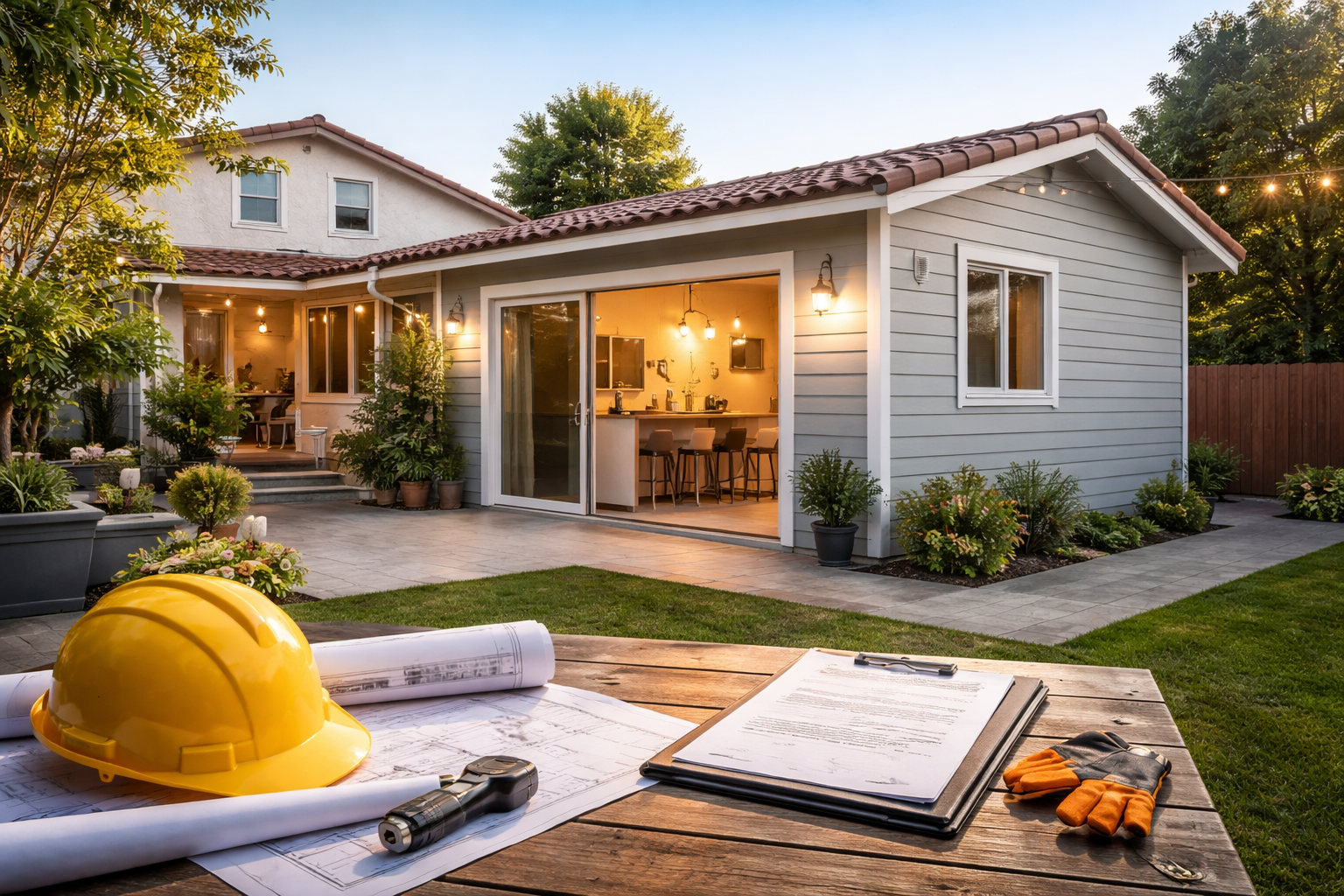
Southern California’s housing crunch has led many homeowners to add rooms, garages, or even separate rental units (ADUs) to their properties without pulling permits. Buying a home with such unpermitted work can be very risky. In California, code violations “run with the land”, the buyer inherits any penalties. This means an illegal addition or ADU becomes your problem once you own the house. Many buyers are surprised to learn that a back yard cottage or expanded living room they love might be an unpermitted addition in Southern California, carrying hidden liabilities.
In California, an ADU (Accessory Dwelling Unit) is a self-contained living space on the same lot as the main house. Permits are required for ADUs and other major modifications, so any ADU built without one is technically illegal. (For example, a recent study found thousands of California ADUs built in cities like San Jose had no permits.) State law has begun to ease the burden: California laws (SB 1226 in 2018 and AB 2533 in 2024) now let older unpermitted ADUs obtain “as‑built” permits under safety codes instead of full modern codes. Still, anyone buying a home with an unpermitted ADU in California must tread carefully, since legalization requires inspections, possible upgrades, and sometimes fees or affordable-housing obligations.
Why a Finished ADU Can Still Be a Serious Liability
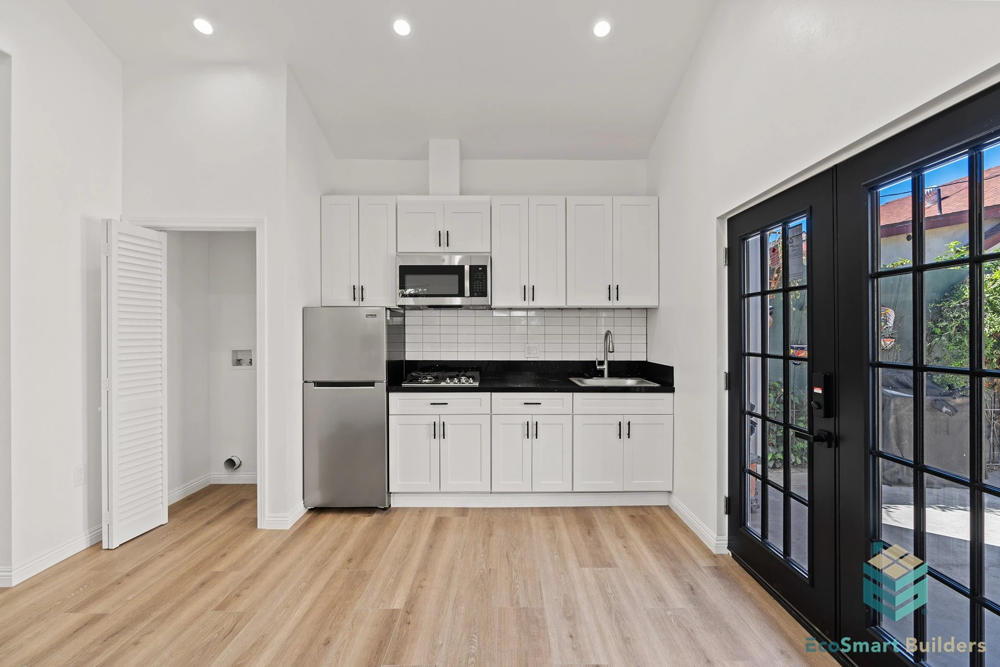
Homebuyers might tour a property with a nicely finished ADU like the one shown above, complete with its own kitchen and bath. The space seems perfectly usable, but even a modern-feeling ADU can hide permit problems. Unpermitted ADUs often have skipped inspections on wiring, plumbing or framing. For example, an illegal unit might use faulty electrical wiring or lack proper exits; issues that wouldn’t pass code. If a fire or collapse happens in that unit, the insurance company will likely deny coverage. In short, a beautifully renovated ADU or addition can turn into a liability if it was built without approvals.
Risks of Unpermitted Home Additions: Buying a home with unpermitted work brings several key dangers:
- Safety hazards: Unpermitted additions skip official inspections, so they often violate building, fire, or electrical codes. These hidden faults can cause fires, collapses or other dangers. (In Oakland, an illegal warehouse conversion fire claimed many lives, illustrating why codes matter.) A deck or stairway built without permits may lack required railings or emergency exits, posing risks to occupants.
- Fines and enforcement: If the city discovers the illegal addition, the homeowner must obtain a retroactive permit or remove the construction. This can mean expensive engineering plans, permit fees and city inspections. Some towns may even require you to tear down the entire illegal structure. Local governments can also impose fines and require back taxes or penalties on the increased value of the improvement.
- Insurance issues: Home insurers often refuse to cover damage related to unpermitted work. If a minor fire or injury happens in that addition, the claim may be denied. Buyers should know that many standard homeowner policies exclude illegal structures, leaving them unprotected.
- Loan and resale problems: Lenders may hesitate to finance a home with undocumented additions. An appraiser might lower the home’s value if unpermitted work is noted. Even after purchase, selling the home later is harder: California law requires disclosing illegal structures in the sale paperwork. An undisclosed unpermitted ADU can scare off buyers or prompt lawsuits for fraud or misrepresentation. And the home’s market price will typically be lower to account for legalization costs.
- Personal liability: If someone is hurt in an unpermitted area, you could be personally sued for damages. For example, if a visitor falls through a substandard deck, you can face a lawsuit, and the injury claim may be denied by insurance. In short, owning an illegal addition exposes you to lawsuits and financial risk.
Laws and Local Regulations in Southern California
California has tried to make legalization easier for old ADUs and similar additions. Under SB 1226 (2018) and AB 2533 (2024), cities can issue a retroactive permit applying the codes in effect when the unit was built. Notably, AB 2533 (effective Jan 2025) prevents cities from denying permits for ADUs built before 2020 merely because they don’t meet today’s ADU standards. Instead, only clear safety issues can block approval, and many impact fees are waived.
In practice, each region applies these laws differently. For example, Orange County ADU permit laws follow AB 2533 closely. The County’s Development Services site describes an AB 2533 “Safe ADU/JADU Legalization Program” that lets owners of pre-2020 unpermitted ADUs bring them into compliance via a health-and-safety inspection checklist. Many OC communities even offered amnesty periods to encourage legalization. Local experts note that converting an illegal garage to a legal ADU is usually cheaper and more valuable than hiding it: a properly permitted ADU can be rented and will increase the property’s value.
Los Angeles
L.A. takes permit risks seriously. The city’s Unpermitted Dwelling Unit (UDU) ordinance (enacted 2017) allows owners to legalize qualifying illegal units if they meet life-safety standards. (L.A. may require an affordable housing unit be set aside in exchange.) In late 2025, local firms even launched ADU-legalization services to streamline the process. One report notes that “many Los Angeles homeowners are living with unpermitted ADUs without even realizing it”, and legalization programs aim to help them avoid fines and make the units safe.
Orange County
Here, the new state ADU rules take effect. Most OC cities now encourage owners to legalize their unpermitted ADUs. Builders report that officials “are urging people to legalize” backyard units built without permits and even offering grace periods without penalties. Orange County’s ADU rules mean any converted garage (even one that doesn’t meet today’s setbacks) can typically be permitted if it was lawfully built originally. No extra parking usually is required under the latest laws. In short, OC ADU permit laws make it relatively easy to get an after-the-fact permit if you follow the process.
San Diego
Similar rules apply here. The City of San Diego notes that SB 1226 and AB 2533 allow single-family homes and ADUs built without permits to obtain building permits retroactively. (SB 1226 covers units built before late 2018, AB 2533 covers those before 2020.) San Diego’s process may require a third-party inspection and some code upgrades, but it avoids outright denial of legal status. On the enforcement side, San Diego County’s Code Compliance warns that continuing unpermitted construction can trigger hefty fines (up to $1,000 per day, capped at $50,000 per year) or even criminal charges. A local expert reminds owners that unpermitted work “could reduce the resale value of your property”, void insurance, and lead to fines or lawsuits. Thus, SD encourages retroactive permitting as the safest path.
How Buyers Can Protect Themselves
If you suspect a property has illegal work, due diligence is vital. Always get a full home inspection and ask to see building department records of permits. You can also directly ask the seller about any unpermitted remodels. When making an offer, include strong contingencies: for example, make the purchase contingent on a clean permit history or satisfactory inspections. You might require the seller to pull any missing permits or adjust the sale price to cover the cost. Options include:
- Ask the seller to fix it before closing: Require them (in writing) to obtain retroactive permits and clear any violations. This shifts liability back to the seller.
- Negotiate a price reduction: If seller won’t fix the problem, offer to buy “as-is” at a discount that reflects the cost of legalizing the addition. You can calculate this by getting contractor quotes on bringing the work up to code.
- Use inspection/permit contingencies: Add clauses allowing you to cancel or renegotiate if unpermitted work is found. Though this may weaken your offer, it protects you from unexpected surprises.
- Walk away if needed: In some cases, the safest move is to back out under contingency. Major structural work or an unwilling seller can make the deal too risky.
No matter what, legalizing unpermitted work is almost always better than ignoring it. With proper legal and contractor advice, most illegal additions can be brought into compliance. In fact, California’s new ADU laws were designed to ease this process.
Bottom Line: Buying a house with unpermitted additions in Southern California carries significant risks from code violations and fines to safety issues and insurance gaps. Recent laws and local programs (in LA, Orange County, San Diego, etc.) provide ways to legalize old ADUs and other additions. However, the responsibility ultimately falls on the property owner, so a buyer must proceed carefully. As one California attorney warns, “What you don’t know can hurt you.” Proactive due diligence and prompt action: inspecting, negotiating permits, and securing legal advice can help you avoid the worst pitfalls. By understanding these Southern California home buying risks up front, you can protect your investment and move forward with confidence.
A Smarter Home Purchase Starts With the Right Questions

Buying a home with unpermitted additions or an ADU in Southern California can work out, but only if you understand the risks before you sign anything. From safety concerns and permit costs to resale and insurance problems, these properties carry real responsibility. The key takeaway is simple: unpermitted work is never “someone else’s problem” once you become the owner.
The good news is that California laws now give buyers more options than in the past. Many unpermitted additions and ADUs can be legalized, especially in Los Angeles, Orange County, and San Diego. Still, every property is different. What seems like a small issue during a showing can turn into a costly project after closing.
The safest move is to slow down, ask direct questions, review permit records, and work with professionals who understand local rules. When you know what to look for, you can protect your budget, your safety, and your future resale value.
Take the Next Step With Confidence
If you are buying or selling a home with unpermitted additions or an ADU, you do not have to figure it out alone.
Jack Ma Real Estate helps Southern California buyers and sellers understand permit issues before they become expensive problems. From spotting red flags during showings to helping you plan the next steps, our team focuses on clarity, honesty, and smart decisions.
Whether you are exploring a home with an unpermitted ADU in California or trying to sell a property with past construction work, Jack Ma Real Estate can guide you through your options with clear answers and local knowledge.
Reach out today and move forward with confidence, before small permit issues turn into big regrets.
FAQ’s
1. Is buying a home with unpermitted work always a bad idea?
No, but it does involve risk. Buying a home with unpermitted work can make sense if the price reflects the issue and the work can be legalized. The danger comes from ignoring the problem or assuming it will never be enforced.
2. Can I be forced to remove an unpermitted addition after buying?
Yes. In some cases, cities can require removal if the work cannot meet basic safety standards. This is one of the biggest California real estate permit risks buyers face.
3. Are unpermitted ADUs treated differently from room additions?
Sometimes. Many cities are more flexible with unpermitted ADU California cases due to housing shortages. Still, safety rules apply, and legalization is not automatic.
4. How can I check if additions were permitted before making an offer?
You can request permit records from the local building department and compare them with the actual layout of the home. A home inspection may also reveal signs of unpermitted construction.
5. Do lenders care about unpermitted additions in Southern California?
Yes. Some lenders will not give full value credit for unpermitted space, and others may delay or deny financing until the issue is resolved. This is a common concern with Southern California home buying risks.
Check out this article next