

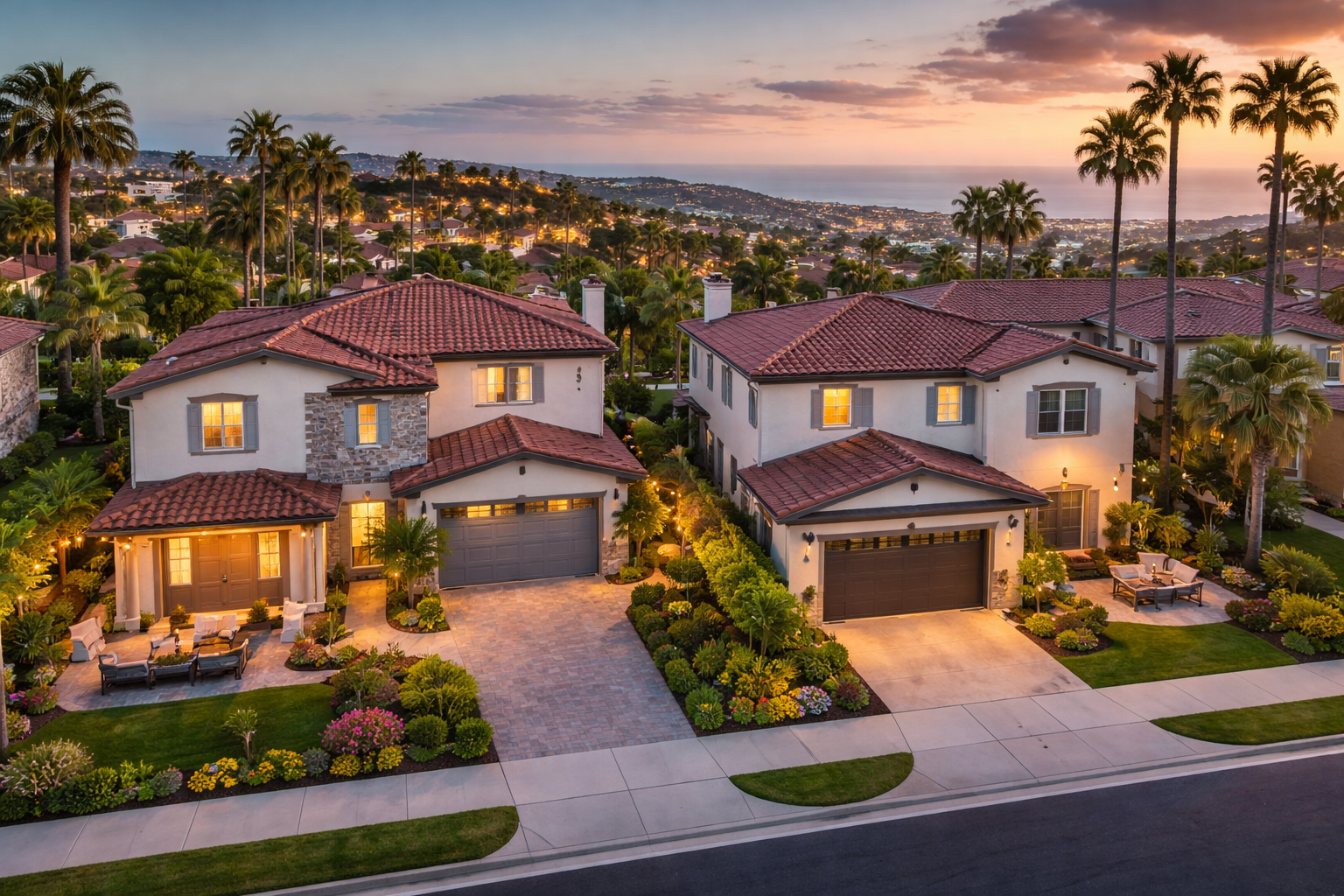
Two houses can look nearly identical: same street, same square footage, same bedrooms and baths, yet sell for very different amounts. In Southern California, many factors drive these neighborhood home value differences. Beyond the obvious size and bedroom count, things like lot size, age, renovation level, curb appeal and even micro-locations within the same area can change a home’s value by tens or hundreds of thousands. Local amenities (good schools, walkability, quiet streets, ocean views) and unique costs or risks (HOA dues, special taxes, wildfire risk) also make a big difference. We’ll explain why home prices vary in the same neighborhood by looking at the key home-specific, location-specific, and market-wide factors. This deep dive into Southern California real estate pricing explained will show how homes are priced in Southern California and why similar homes sell for different prices.
Home Features and Lot Characteristics

Even on the same block, houses rarely match feature-for-feature. Simple differences in the house or lot can justify large price gaps:
- Square footage and lot size. A bigger house normally costs more. Buyers often pay a premium for extra living space. Likewise, a larger lot adds value. But it’s not just acreage, usable land matters most. One guide notes that two lots of identical size can have very different utility: “A comp with a pool-ready pad or large, buildable terrace is not equivalent to a steep, unusable slope”. In other words, a flat, developable yard (for a pool or ADU) will make a home worth more than a house on a steep, unusable hillside lot, even if both lots are the same size.
- Age and condition. Newer or well-maintained homes fetch higher prices. A freshly renovated kitchen or bath, new roof, and modern systems instantly boost value. Conversely, an older home with outdated appliances, peeling paint, or needed repairs will sell for less. As one real estate source puts it: “Newly built or recently renovated homes with modern finishes and systems typically command a premium over dated properties in need of repair”. In practice, the difference can be $50,000 or much more. For example, a luxury remodel might justify a five-figure price bump over a similar unrenovated house.
- Curb appeal and extras. First impressions count. A home with fresh exterior paint, attractive landscaping, and clean, inviting entrance will be valued higher than one with overgrown yard and faded siding. Upgraded features like energy-efficient windows, solar panels, or a well-designed outdoor patio also add value. Special amenities (swimming pools, outdoor kitchens, or scenic decks) can justify paying more. On the other hand, a home lacking these extras often sells lower. Real estate appraisers adjust aggressively for upgrades and condition: two similar houses may differ by $50–$100 per square foot or more, depending on finish level.
- Floor plan and layout. Subtle differences in layout matter too. For instance, a home with an extra living room, an added sunroom, or an in-law suite (ADU) will be priced higher than a basic model home of the same base size. Even the direction a house faces (morning vs. afternoon sun) can sway buyers. In SoCal where indoor-outdoor living is prized, houses with better flow between living rooms and patios often sell at a premium.
In short, property-specific factors like size, condition, and features can push prices up or down even between “twin” homes. A real estate analysis notes that a home’s “size (square footage), age, condition, architectural style, and amenities have a significant impact on its market value”. A new roof, a stylish addition, or an extra square foot here or there can change the price tag by tens of thousands.
Neighborhood and Local Factors
Even side-by-side homes can sit in slightly different micro-environments that local buyers care about. Key neighborhood factors include:
- School districts. In California, school quality is a major draw. Homes just inside a top-rated school zone often sell for much more than identical homes a block away in a less-desirable district. Studies show homes in high-performing districts can fetch 10–20% more than similar houses in average districts. For many buyers in Southern California, the local elementary or high school rank is a deal-maker. Two houses with identical specs could differ by tens of thousands if one is zoned to a coveted school and the other is not. Even if both are in the same nominal neighborhood, the school boundary lines often snake around blocks, creating these neighborhood home value differences.
- Walkability and amenities. Proximity to shops, restaurants, parks, and transit has become a strong price factor. According to local market experts, walkable neighborhoods where you can easily stroll to daily needs tend to command higher home prices. For example, homes near downtowns or popular town centers in SoCal often sell for more than similar suburban homes with no nearby conveniences. A San Diego-area Realtor notes that “areas where residents can easily walk to shops, restaurants, schools, parks, and transit often see higher demand and higher prices”. People value the convenience and lifestyle. Conversely, a home on a block with no sidewalk or far from any shops can sell lower, even if it’s physically similar to a home just a few blocks over that’s in a walkable spot.
- Traffic and noise. Location also means which street the house is on. A home on a busy thoroughfare or near an airport will typically sell for less than an identical house on a quiet side street. Buyers prefer peace and quiet, so noise from freeways, trains, or nightclubs can shave value. One real estate summary explains that noise pollution “due to busy roads, airports… or power plants can reduce the values of houses”. In practical terms, two nearly identical homes on the same block may be priced differently if one fronts a major road. A house on a bustling street might sell for 5–15% less than one set back on a calm lane. Reducing street noise by landscaping or sound-proofing can help, but usually it still yields a discount. As a San Diego broker bluntly puts it: “Noise, traffic, and walkability directly influence how buyers perceive a home, and how much they’re willing to pay.”.
- Views and privacy. In Southern California, views are golden. Ocean, mountain, canyon or city skyline views can command large view premiums. A Los Angeles seller’s guide estimates that a panoramic ocean or skyline view can add roughly 15–30% to a home’s price, whereas a minor or obstructed view adds much less. For example, two identical 2,000 sq.ft. condos on Catalina Island might differ by hundreds of thousands if one has sweeping ocean views and the other faces a parking lot. Privacy matters too: one hillside house shielded by trees might sell higher than its mirror-image neighbor with a busy trail behind it. Basically, anything that enhances the sense of privacy (distance from neighbors, gated entry) is a plus; anything that detracts (visible traffic, loud golf driving range) is a minus. A Hollywood Hills analysis shows typical adjustments: homes with “significant privacy” can add 5–15% to value, while homes exposed to freeway noise might see a -3% to -12% penalty.
Together, these location-based factors often explain why two side-by-side homes sell for different prices. Even within one small area, local features like schools, parks, street type, and views cause Southern California home prices to vary. A 2026 market report warns buyers and sellers that “Southern California is not a single market. It is a collection of micro environments shaped by employment centers, school districts, commute patterns, and housing types.”.
Market Conditions and Buyer Demand
Beyond the house and neighborhood itself, market factors can drive price variations. Southern California’s housing market has unique dynamics that affect pricing:
- Inventory (supply) levels. Historically, SoCal has suffered from chronic housing undersupply, especially in coastal areas. When there are far fewer homes for sale than buyers who want to buy, prices rise across the board. For a long time, Southern California had months of supply well below the 4–6 months needed for a balanced market. Even with recent slowdowns, the area remains tight: one analysis (mid-2025) notes only about 2.5 months of supply, keeping upward pressure on prices. Low inventory means similarly equipped homes can still generate bidding wars, but the strongest buyers may outbid others, resulting in different final prices. If inventory slowly rises (as analysts note began in 2024), that can cool high bids and compress price differences. A recent housing analysis suggests the era of “unchecked growth” in SoCal is ending, meaning prices move by real value rather than sheer hype. In practical terms, a well-priced, move-in-ready home will sell fast and often for top dollar, while a similar home with poor pricing or marketing may linger and be reduced. This affects same-neighborhood homes differently depending on seller strategy and timing.
- Interest rates and affordability. Mortgage rates in California have soared from historic lows. For example, in late 2021 rates were around 3%, but by late 2022 they jumped near 7%, and in mid-2025 remained elevated. This drastic increase has two effects. First, higher rates effectively reduce what buyers can afford, since monthly payments go up. Second, many existing SoCal homeowners are locked into super-low interest (often under 4%) thanks to past refinancing. One state report notes 77% of Californian homeowners still have mortgages under 5%. This lock-in effect means these owners are reluctant to sell and take on a new loan at today’s higher rates. Fewer sellers on the market (despite rising home values they hold cheap financing) keeps supply down. As a result, prices remain firm. For buyers, higher rates translate to higher overall home cost even if the sticker price is the same. This can widen the gap between list and selling price, in effect, cash-rich or big-agent-backed buyers might still pay aggressive prices on move-in ready homes, while more constrained buyers wait or offer less.
- Buyer demand and competition. Southern California demand is strong due to jobs, climate, and lifestyle. But buyer behavior changes with market sentiment. During 2020–22, frenzied demand caused many houses to get multiple offers over asking price. Lately buyers have become more cautious as prices plateau. Industry analysis notes that the intense bidding environment has calmed: buyers now “submit offers at a slower pace” and are more willing to wait for price drops. This means two very similar homes could see different outcomes: one might still attract a top bidder immediately, selling high; another might take longer and require reductions. Neighborhoods with homes in consistently high demand (e.g., near new tech offices or coveted schools) still see competition, while less trendy micro-markets see cooling. The result: market competition itself can cause price spreads even among like houses.
- Investor activity. In recent years, institutional investors and corporate landlords became a talking point in housing. In some parts of the U.S., big investors bought many single-family homes to rent out. In California, however, research shows this impact is relatively small. One report finds less than 2% of California single-family homes are owned by buyers with 10 or more homes. Redfin’s chief economist even calls the “investor problem… a boogeyman,” noting that a lack of housing supply is the real driver of high prices. That said, there are pockets (like parts of the Inland Empire and Central Valley) where investor activity is higher. In those areas, an investor-backed home might go for a premium rent-buy price, but in pricey coastal SoCal markets the effect is smaller. For individual price differences on one street, investor activity usually matters less than other factors. But it’s worth noting: if one home is being sold to an investor (or a non-owner-occupant) and the next is to a family, the investor might value it for rental return, affecting the deal terms.
Overall, market factors like tight inventory, high interest rates, and buyer demand shape Southern California home prices everywhere, but subtle shifts in these factors can make a difference of thousands of dollars from one listing to the next. A 2026 market forecast highlights this: “Southern California’s housing market can be described as resilient and stabilizing… well-priced homes continue to attract serious attention,” while others may not. In other words, in today’s SoCal market, pricing accuracy matters more than ever.
Special Costs and Risks
California has unique fees and risks that can affect a home’s value and how buyers bid. Among these:
- Mello-Roos taxes. Many newer Southern California communities are built with special tax districts (Mello-Roos) to fund local infrastructure (roads, parks, schools). Homes in these districts pay an extra annual tax on top of regular property tax. This could be a few hundred up to several thousand dollars a year. One guide notes that these taxes “can range from a few hundred to several thousand dollars per year” depending on the district. Because buyers factor this into their monthly costs, a home under a Mello-Roos levy effectively costs more to own. Lenders include it when qualifying borrowers, which can reduce the loan amount a buyer can get. Practically, this means two identical houses, one with Mello-Roos and one without, can sell for different prices. Buyers often discount homes with high Mello-Roos because their carrying costs are higher. For example, if House A has a $5,000 yearly Mello-Roos bill and House B does not, buyers might offer more on B to compensate. Real estate professionals in Orange County advise carefully checking CFD (Community Facilities District) reports because even an extra ~$500/month in taxes can deter some buyers.
- Homeowners’ Associations (HOAs). If one house belongs to a homeowners association with monthly dues while its neighbor does not, that will affect price. HOA fees pay for amenities and maintenance, which can increase value if the community is well-run (e.g., gated security, pools, landscaping). But high fees also shrink the pool of willing buyers. An HOA-fee analysis reports that “high HOA fees might scare off potential buyers, making your investment riskier” and that buyers “may have to lower their asking prices to attract buyers” if dues are excessive. In Southern California, HOAs vary widely: some condo complexes charge $500+ per month (which can drop sale price), while many detached homes have very low or no HOA. Thus, two neighboring houses could carry very different HOA obligations, tilting their values.
- Prop. 13 property taxes. California’s Proposition 13 limits annual property tax increases but reassesses value upon sale. An older home that hasn’t sold in decades may have a very low tax basis. A newly built home or one sold after many years will have a much higher assessed value (1% of current price). This means an identical house with the same selling price could cost more annually in taxes, depending on its purchase history. Savvy buyers factor this in: sometimes an otherwise equivalent home may sell for a bit more if its seller’s tax basis is low, knowing the new owner will face higher taxes. Conversely, buyers sometimes prefer homes with lower tax burdens and slightly bid up those.
- Wildfire risk and insurance. Southern California’s fire-prone hillsides are now affecting prices. Houses in “High Fire Hazard Severity Zones” may face higher insurance rates or even difficulty getting coverage. A Federal Reserve study finds that being farther from past wildfires is linked to about a 2% higher home value in California. In plain terms, homes safe from burn zones sell for roughly 2% more than if they were closer to recent fire perimeters. Another analysis notes that in recent years, proximity to wildfire burn areas has more strongly depressed values than before. Buyers know that neighborhoods near chaparral or brush have more risk, so two similar hillside homes could be priced differently if one is in a stricter brush zone. For example, a house with defensible-space clearance and fire-resistant features might sell for more than one equally sized home right behind a wildfire burn area.
- Other nuisances and disclosures. California also requires disclosure of other environmental risks. A home next to a noisy freeway, power lines, or in an earthquake fault zone often trades at a discount. Even factors like being on a downhill side of a street (flood risk) or near an industrial site can affect local demand. All these are part of neighborhood home value differences. One pricing guide sums it up: issues like helicopter traffic, freeway noise or high wildfire exposure often merit price discounts of around 3–30%.
- Curb appeal/landscape rules. In some master-planned SoCal communities, strict HOA or city rules govern fences, paint colors, or lawn irrigation (for drought). A home that violates these may have a tougher sale. In general, homes with good “first impressions” tend to sell faster and higher. Even simple factors like a fresh lawn (especially important during occasional drought relief periods) can matter in a region obsessed with outdoor living.
These extra costs and risks are sometimes unique to California. Buyers here know about Mello-Roos, HOA obligations, and wildfire zones more than almost anywhere else in the U.S. They go into the purchase calculation. Thus, what impacts home prices in Southern California goes beyond the four walls of the house to include community taxes, fees, and environmental safety.
Putting It All Together: Pricing in Practice
How does a seller or agent turn all these factors into a price? In practice, homes are often priced by comparing to recent “comps” (comparable sales). But adjustments are made for all the above differences. For example, if a nearby sold home had 2 more bedrooms and a newer kitchen, the appraiser will down-adjust the comp or up-adjust the subject. If a comp home had no view and your home has a spectacular view, you add a “view premium” of perhaps 10–20% to the base. If one house is larger lot size or built two decades later, price differences reflect that.
Real estate experts in Los Angeles often use a percentage-based framework for such adjustments. One Hollywood Hills analysis suggests adding 15–30% for a panoramic ocean or skyline view, another 5–20% for ample usable land (pool/ADU space), and subtracting up to 10–30% for serious issues like wildfire risk or noise. Under this method, two “identical” houses might start with the same base price per square foot but then diverge once you factor in these extras or penalties.
In plain terms, how homes are priced in Southern California is a mix of art and science. Agents crunch numbers on comps, but also flex their judgment about which features buyers will pay more for. In the current market, both buyers and appraisers are paying closer attention to these nuances. For example, one San Diego agent notes that today “buyers have more time to consider options;… well-priced homes continue to attract serious attention”. In other words, a home that highlights its best features (good school, renovated kitchen, nice view) will stick out and get strong offers, whereas a similar-but-slightly-less-appealing home might sell for less or need incentives.
Finally, remember that Southern California housing market conditions change over time. A pricing factor that mattered in 2022 (like crazy low mortgage rates) may weigh differently now (as rates rose). However, fundamental differences like lot, location, and quality remain important year after year. As one recent guide concludes, Southern California’s market is “entering a phase defined by realism rather than momentum”. Buyers and sellers should study neighborhood home value differences carefully rather than assume every home is valued equally.
A Clearer Way Forward in the Southern California Housing Market
Understanding why home prices vary in the same neighborhood helps buyers and sellers move with confidence. Once you see how upgrades, lot use, schools, taxes, noise, and risk shape Southern California home prices, the numbers start to make sense. Price gaps are rarely random. They reflect real trade-offs buyers are willing to make and costs they want to avoid.
In today’s Southern California housing market, the homes that sell best are the ones priced with accuracy, supported by real comparisons, and positioned honestly. Whether you are buying or selling, knowing how homes are priced in Southern California puts you in control. The more clearly you understand what impacts home prices in Southern California, the easier it becomes to spot value, avoid overpaying, or price your home correctly from the start.
Ready to Make Confident Moves in Southern California Real Estate?
Every street, block, and listing tells a different story. Jack Ma Real Estate helps buyers and sellers understand neighborhood home value differences so decisions are based on facts, not guesswork.
Whether you are trying to understand real estate pricing differences Southern California buyers face, deciding how to price your home, or comparing similar listings, the right guidance makes all the difference.
Jack Ma Real Estate offers:
- Local pricing insight based on real sales, not estimates
- Clear explanations of value differences between similar homes
- Support for buyers, sellers, and investors across Southern California
- A practical approach that focuses on long-term results
If you are ready to take the next step, connect with Jack Ma Real Estate and get clarity on where your home or your future home truly stands in today’s market.
FAQs
1. Why do similar homes sell for different prices in the same Southern California neighborhood?
Even when homes look alike, differences in lot use, upgrades, school zones, HOA fees, street noise, or view can change value. These factors explain why similar homes sell for different prices even on the same block.
2. Do school districts really affect Southern California home prices?
Yes. School boundaries often create sharp neighborhood home value differences. Homes tied to higher-performing schools usually sell faster and at higher prices.
3. How much do HOA fees and Mello-Roos taxes affect pricing?
Monthly HOA dues and annual Mello-Roos taxes increase ownership costs. Buyers factor these into affordability, which can lower offers compared to homes without these fees.
4. Are views and privacy really worth paying more for?
In many parts of Southern California, views and privacy strongly influence demand. Homes with ocean, canyon, or city views often command higher prices than similar homes without them.
5. How can I tell if a home is priced fairly in my neighborhood?
Fair pricing comes from recent local sales, not online estimates. Working with professionals who understand Southern California real estate pricing, explained through real data, helps avoid overpaying or underpricing.
Check out this article next