

Many people feel squeezed by rising home prices, higher interest rates, and tighter budgets. When monthly mortgage payments grow too large, it’s natural to look for ways to reduce the burden. That’s why the 50-year mortgage draws attention whenever affordability becomes difficult. At first glance, a loan stretched over fifty years seems like a flexible way to lower monthly payments and make a home purchase feel more possible. Many assume that if a 30-year mortgage is standard, extending the term must simply create a more comfortable payment plan. But that idea hides serious risks. A 50-year mortgage often creates long-term financial strain, slows wealth building, and significantly increases the total interest paid. It can even delay your ability to own your home in a meaningful way. This blog breaks down how 50-year mortgages work, why they appeal to some buyers, and why they can lead to long-term challenges. It also includes important financial realities that many overlook when comparing a 50-year mortgage to a 30-year mortgage.
What Is a 50-Year Mortgage?
A 50-year mortgage is a home loan with a repayment term spread across fifty years. Because the payment schedule is extended, the monthly payments are lower than those on a traditional 30-year mortgage. This can make homeownership appear more accessible, especially to people with tight budgets or households that need to qualify for a larger loan amount.
However, a 50-year mortgage does not reduce the total cost of the loan. In fact, it usually increases it dramatically. The extended term means the loan accrues interest for two additional decades. Because of that, most borrowers pay much more over the life of the loan, even if the monthly amounts feel easier right now. A longer mortgage term also slows the rate at which your principal balance decreases. For many years, most of your monthly payment mainly covers interest instead of helping you build equity. These are the foundational trade-offs that shape the rest of this discussion.
How 50-Year Mortgages Work?
A 50-year mortgage uses a repayment schedule that spreads the total loan amount across 600 monthly payments. By stretching payments over such a long period, the immediate monthly cost becomes smaller. However, this structure introduces long-term mortgage repayment challenges. Because the loan is amortized over fifty years, the early payments barely touch the principal. The amount you owe decreases very slowly. In some cases, after five years of payments, the loan balance barely changes at all. Borrowers often look at the monthly payment and forget that the loan must be serviced for half a century unless they refinance or sell. That means carrying debt far later into life, including retirement years for many people. Another issue is that lenders may charge higher interest rates for 50-year mortgages. Their risk increases as the timeline extends, and they must plan for decades of inflation, market swings, and changes in borrower stability. This means the cost of interest on a 50-year loan often exceeds what many buyers expect. For borrowers who plan to refinance or sell early, the slower payoff pace creates another challenge: you may still owe almost the same amount you borrowed when you try to exit the loan.
Pros and Cons of 50-Year Mortgages
While 50-year mortgages attract attention for affordability reasons, they bring a mix of benefits and drawbacks.
Pros
Lower monthly payments
The main appeal is a smaller monthly mortgage payment. This helps buyers who struggle with debt-to-income ratios or who want more short-term flexibility.
Increased buying power
Lower monthly payments can help some people qualify for a larger loan amount than they could with a 30-year mortgage.
More room in the monthly budget
Lower payments may free up money for savings, investments, or day-to-day expenses.
Cons
Much higher total interest
Stretching the loan over 50 years makes the cost of borrowing significantly higher. You pay interest for twice as long.
Slow equity growth
Because early payments focus on interest, your balance drops very slowly. This is why 50-year mortgages reduce home equity growth.
Higher likelihood of negative equity
If home values fall, you may owe more than the home is worth due to the slow reduction in principal.
Long-term financial commitment
A mortgage lasting fifty years means many borrowers will carry debt well into retirement.
Limited lender availability
Few lenders offer true 50-year mortgages, and those that do may charge higher rates or add stricter requirements.
Refinancing risk
If interest rates rise or home values fall, refinancing may not be possible.
Why 50-Year Mortgages Are Risky?
A 50-year mortgage exposes borrowers to risks that may not be obvious at first glance.
The Hidden Risks of Ultra-Long Mortgages
One major issue is how long the debt lasts. A half-century is a long time to commit to a financial obligation. Throughout this period, a borrower may experience job changes, health issues, economic downturns, or shifts in housing needs. Because the loan balance decreases slowly, borrowers have less flexibility. If financial stress occurs, there is less equity available to refinance, access cash, or sell without taking a loss. Ultra-long mortgages also create issues during retirement. Most buyers taking out a 50-year mortgage will still be making payments in their 70s or even 80s unless they sell or refinance earlier. Another overlooked danger is how extended loan terms raise total interest. Even if the interest rate matches a 30-year mortgage (which is rare), the long term increases the total interest dramatically. But as you’ll see in the next section, interest rates are almost never equal and that makes the difference even worse.
Important Reality Most Borrowers Overlook
There’s another key point that many people forget when comparing a 30-year mortgage to a 50-year mortgage:
The interest rate on a 50-year mortgage will almost never match the rate on a 30-year mortgage.
Lenders take on much more risk with a 50-year term:
The loan stays on their books for two extra decades
There’s more exposure to inflation
There’s a higher chance of default, refinance, or economic uncertainty
They must predict several market cycles, not just one
Because of this, lenders usually price 50-year mortgages higher than 30-year loans.
A Realistic Example
30-year mortgage rate: ~6.25%
Likely 50-year mortgage rate: closer to 7% or higher
That increase may seem small, but across fifty years it causes enormous differences in:
total interest paid
speed of equity growth
how quickly you gain ownership
how long you remain behind on the principal
Even initial comparison examples become much worse once you factor in the higher rate for the 50-year mortgage.
What This Really Means?
A 50-year mortgage may reduce the monthly payment a little…
but it does so by charging you more interest at a higher rate, for a much longer time.
For most people, this combination creates long-term financial strain, which is why the 50-year mortgage rarely benefits the average homeowner.
50-Year Mortgage vs. 30-Year Mortgage
A side-by-side comparison highlights the difference clearly.
Payment Size
A 50-year mortgage has smaller monthly payments, but often not as small as buyers expect. In many cases, the difference between a 30-year and 50-year payment is surprisingly small compared to the huge increase in total cost.
Interest Cost
A 50-year mortgage increases the total interest dramatically. Even a slight rate increase on top of a longer term can double or triple total interest.
Equity Growth
A 30-year mortgage builds equity much faster. By the time the 30-year loan is paid off, someone with a 50-year loan may still owe more than half the original balance.
Financial Flexibility
Because 50-year loans build equity slowly, borrowers have fewer options for refinancing or tapping into equity.
Stability
A 30-year mortgage provides a clearer timeline toward debt freedom. A 50-year mortgage may keep borrowers in debt during stages of life where income declines.
Who Offers 50-Year Mortgages?
While 50-year mortgages are discussed more often today, they remain rare.
Most major lenders do not offer them because the financial risk is high. Some specialty lenders and niche programs may offer versions of extended-term mortgages, but availability varies widely.
Often, these loans are structured as:
adjustable-rate mortgages
interest-only periods before the 50-year amortization begins
custom loan products for high-cost regions
Because offerings are limited, borrowers may face higher requirements, stricter underwriting, or less favorable terms.
Why Longer Mortgage Terms Increase Costs?
A longer loan term increases risk and cost in several ways.
How Extended Loan Terms Raise Total Interest
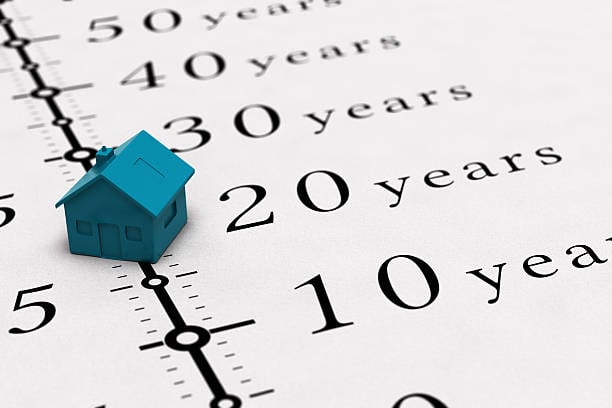
Interest accumulates over time. With a 50-year mortgage, the repayment timeline doubles, so interest continues to build long after a borrower with a 30-year loan would have achieved debt freedom.
Even if interest rates were identical which they rarely are, the total interest on a 50-year mortgage is far higher.
But because 50-year loans often carry higher rates, the cost multiplies even more.
Why Lower Monthly Payments Can Cost More
A borrower pays less each month but pays it for much longer, with a higher interest rate. Over years and decades, this adds up to far more total cost, reducing long-term wealth.
How Interest Adds Up Over 50 Years?
The structure of a 50-year mortgage means interest dominates the payment schedule for a very long time.
Principal decreases slowly
Borrowers may spend decades without seeing meaningful reduction in the balance
Equity builds at a crawl
Rate increases amplify the total payout
This slow reduction in principal makes it harder to refinance or sell, especially if home values fall or remain flat.
Is a 50-Year Mortgage Worth It?
In certain narrow cases, a 50-year mortgage may provide short-term relief.
But for most borrowers, the long-term cost outweighs the benefit.
Situations Where It Might Help
Short-term homeownership (planning to sell soon)
High-income households wanting cash flow flexibility
Buyers expecting a major future increase in earnings
Situations Where It Usually Hurts
Long-term homeowners
Families planning for retirement
Buyers who need equity quickly
People in uncertain economic conditions
Anyone sensitive to interest costs
The structure often prevents the homeowner from gaining meaningful ownership until very late.
Better Alternatives to 50-Year Mortgages
There are safer ways to reduce monthly payments without locking yourself into fifty years of debt.
Alternatives to Long-Term Home Loans
Consider a 30-year fixed mortgage with a rate buy-down
Use an adjustable-rate mortgage for temporary relief
Choose a smaller home or adjust your budget
Refinance later if rates drop
Make extra payments when possible
Explore government-backed loans that offer softer qualification rules
These options give more control and avoid the high long-term cost.
Conclusion
A 50-year mortgage may sound helpful at first. It promises lower monthly payments and a more manageable path into homeownership. But beneath the surface, the long-term costs and risks are significant. The loan lasts much longer, equity builds slowly, and total interest becomes enormous, especially since 50-year mortgage rates are usually higher than 30-year rates. For most borrowers, a 50-year mortgage trades short-term comfort for long-term financial strain. Better alternatives exist that help make payments manageable without sacrificing decades of financial stability.
At Jack Ma Real Estate, we believe homeowners deserve clarity and long-term financial stability not decades of unnecessary debt. With rising prices and tighter budgets, 50-year mortgages are drawing attention, but our analysis shows they often create more risk than relief: slower equity, higher interest, and debt that can follow you into retirement. Homebuyers need trusted guidance now more than ever. If you want smart, sustainable strategies, not risky loan structures, Contact Jack Ma Real Estate today.
FAQs
1. Do 50-year mortgages help with affordability?
They reduce monthly payments slightly, but they increase total cost and slow equity growth.
2. Are interest rates higher on 50-year mortgages?
Yes. Lenders increase the rate because of the added risk, which raises the total interest paid.
3. Can I refinance a 50-year mortgage later?
Possibly, but slow equity growth may limit your options or make refinancing difficult.
4. Will a 50-year mortgage affect retirement?
Yes. Many borrowers still carry the loan into retirement, reducing financial flexibility.
5. What is a better option than a 50-year mortgage?
Most people are better served by 30-year fixed loans, ARMs, refinancing strategies, or rate buy-downs.