

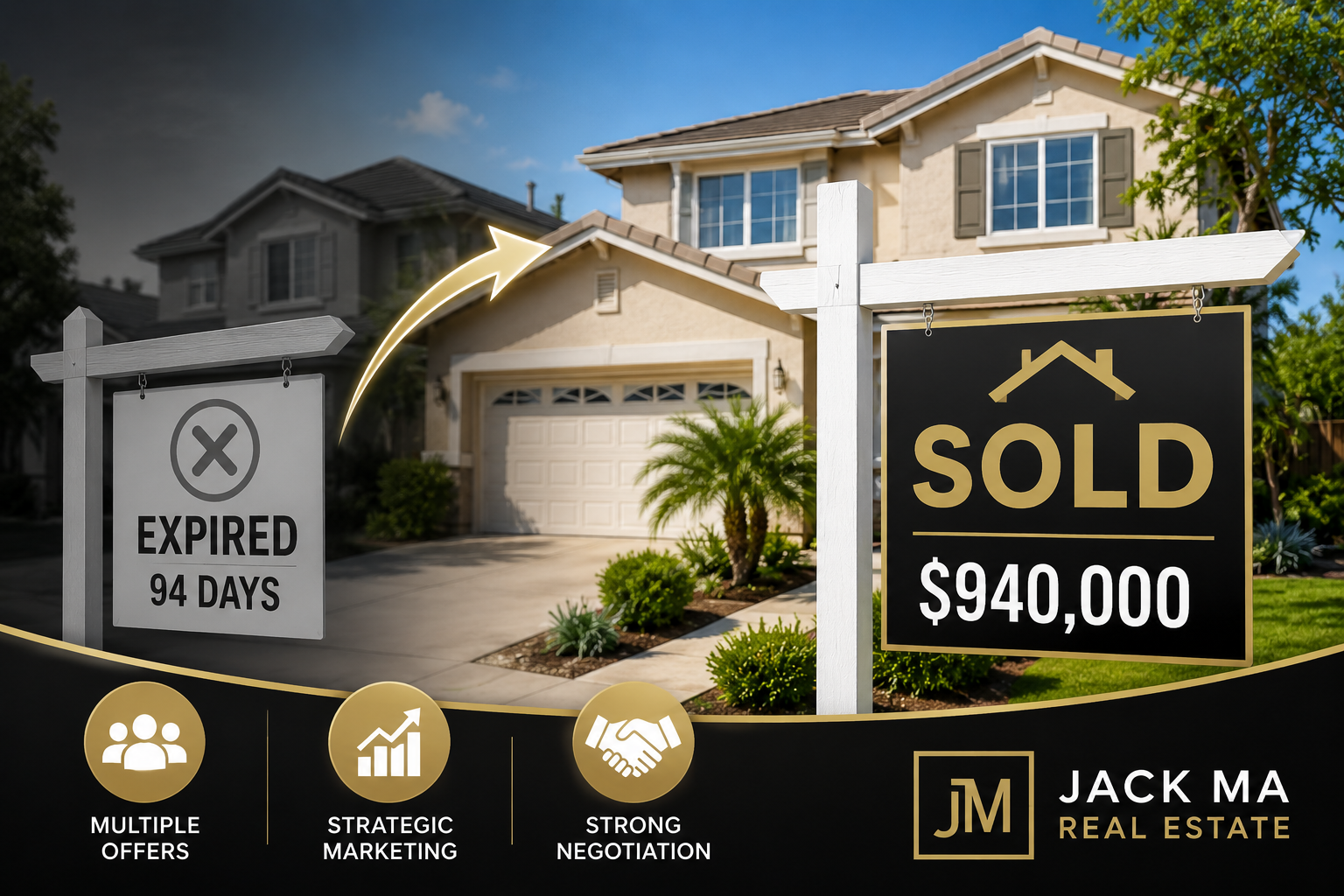
Chino Hills has long been one of Southern California’s most desirable communities. With hillside neighborhoods, top-rated schools, and easy access to the 60, 57, 91, and 71 freeways, homes here typically move quickly. In fact, Homes.com reports the average Chino Hills residence sells in about 40 days (versus the national average of 57 days), with a median sale price around $1,020,000. A well-priced, well-marketed home shouldn’t sit idle for months in this market. Yet one 3-bed, 2.5-bath Chino Hills home did just that, 94 days on market with only one offer, before eventually selling for $940,000 after a different strategy. Understanding what went wrong and how it was fixed offers a powerful case study for any seller asking “why homes don’t sell” and how to turn an expired listing into a success.
The Chino Hills Market: Demand, Price, and Days on Market

Chino Hills, in southwestern San Bernardino County, remains a family-friendly area with lots of amenities. Houses here command high prices: as of early 2026 the median sale price hovered around $1,020,000, up slightly year-over-year. Because the city is near several major freeways (including the 60, 71, and 91 Freeways) and well-known attractions like Chino Hills State Park and the new Chaffey College campus, demand is strong. In fact, local data show single-family homes usually sell in about 40 days on market, well below the 57-day U.S. average.
In a seller’s market like Chino Hills real estate, many homes sell “for sale” within days. When a home doesn’t sell after weeks, owners start looking for answers. Often it comes down to price, condition, marketing, or all three.
Why This Listing Stalled
For this particular home, the owner had a firm bottom line: a minimum net proceeds he needed from the sale. That target was actually slightly above what the local market suggested. Setting an ambitious price can sometimes work, but in this case it meant trouble. The home listed for much of its 94-day stretch near or above comparable-market value. As real estate experts note, overpricing is one of the most common reasons homes don’t sell. When a home’s asking price is higher than buyers expect, traffic drops. They either don’t schedule showings or hesitate to make strong offers.
In this case, the listing attracted exactly one offer, far short of the three or more offers that savvy agents seek to create competition. With just one bidder, the seller had no leverage. The buyer knew it. In that one offer, the buyer pressed for concessions (repair credits) knowing the seller was under pressure. Instead of pushing back or seeking other buyers, the original agent kept returning to the seller with one message: “Accept less.” Faced with a lowball offer and an impatient agent, the seller refused, and the deal fell apart. The listing expired.
This outcome wasn’t due to bad luck; it was a combination of mispriced listing and weak strategy. As one expired-listing specialist explains, homes can “sit stagnant” and see “minimal interest” when priced too high. Add mediocre marketing and no backup plans, and the result is exactly what happened here. In short, there was nothing magical about this failure; it was avoidable.
Avoiding Common Pitfalls: Price, Condition, Marketing
Before relisting, the new agent (Jack Ma) reviewed the data. He confirmed the seller’s required net was slightly above typical comps. That meant the home could sell for that amount, but only with careful strategy. The difference between “ambitious” and “impossible” pricing depends on execution.
Key lessons from this scenario reflect industry best practices. Agents and brokers universally cite these causes for an expired listing:
- Overpricing: As one agent-blogger put it, “Overpricing is perhaps the most significant reason homes don’t sell.” Asking more than the market will bear often leads to weeks of no activity.
- Home Condition: A worn or outdated home can deter buyers. Simple fixes (fresh paint, cleaning, minor repairs) and staging are essential; buyers must imagine themselves living there.
- Poor Marketing: In today’s digital age, marketing is critical. Listings need professional photos, videos, virtual tours, and targeted ads to stand out. Without them, even nice homes get overlooked.
In this case, the home was in good shape and average condition; it simply wasn’t presented to win. The previous agent’s marketing was inadequate. The listing had minimal showings and no buzz. Buyers saw stale photos and an aspirational price, shrugged, and moved on.
Crafting a Winning Expired Listing Strategy
When the seller brought the job to Jack Ma (a licensed California REALTOR® in the Inland Empire and a Century 21 Chino Hills agent), he had one clear charge: “I told you what my bottom line is. You go out and get it.” Jack’s strategy was to create competition and then negotiate from strength, exactly the opposite of the prior attempt. The goal was to generate multiple offers so the seller wasn’t stuck with one low bid.
Key steps in the new strategy included:
- Realistic Repricing: Jack recommended listing the home for a bit below the seller’s target net price (accounting for commissions and costs). This made the home more attractive to buyers and increased online attention. The trick: list under a whole number (e.g. $924,900) that still allowed room to negotiate up to the target.
- Aggressive Marketing: The marketing plan was layered and targeted. It included professional photography and a video tour to showcase the home at its best. (Studies show homes with professional photos sell 32% faster than those with amateur shots.) The listing was blasted on the MLS, Century 21’s internal network, Zillow (with Showcase ads), and social media. Ads were geo-targeted to families and relocation buyers searching Chino Hills. The agent also contacted his personal buyer database and other agents with ready buyers in the area.
- Estate Network Reach: As a Century 21 Chino Hills agent, Jack leveraged the firm’s office of 1,500+ Southern California agents. His colleagues were alerted directly about this new listing. This in-house network helped put the home in front of more qualified buyers who might not have seen the previous listing.
Taken together, these steps embody a classic expired listing strategy: reassess everything that went wrong, then turn up the heat. In Jack’s words, it was “not a special skill, just good marketing.” By pricing carefully and spreading the word widely, he gave the home “every chance to sell” fast.
Generating Multiple Offers: The Seller’s Advantage
The difference between selling from a position of weakness (one offer) versus strength (multiple bids) is enormous. In a multiple-offer situation, the seller controls the process. Buyers compete, and the seller can sit back and say, "What's your best and final?“ In fact, industry experts note that “a multiple offer situation often means a seller has the upper hand in a deal." With several bids in hand, the seller can weigh not just price but all terms (closing help, dates, and contingencies) to decide what truly meets their goals.
Jack’s initial goal was to drive interest quickly and get at least three offers. He knew that with more interested buyers, the market would push the price up. Indeed, once the home was re-listed on March 31, it triggered a flood of showings. Within days, three offers were on the table, exactly the pressure needed.
In this environment, one offer is never enough; three or more become “options.” To illustrate how powerful this is: before relisting, the only choice was to take the low offer or walk away. After marketing, the conversation changed to "The buyers are competing; who will win?” This is the essence of a multiple-offer strategy. It shifts the power to the seller and forces buyers to improve their terms if they want to win.
As one seller-advice piece explains, in multiple-offer scenarios a good agent will “compare and contrast offers” and choose the one that best meets the seller’s goals. Jack did just that. He sifted through the three bids, looking at more than just the dollar amount, he checked buyer financing, inspections, and timelines. Then he worked to get each buyer up. When the best initial bid still came in below the bottom line, he countered strategically.
Negotiating for the Bottom Line
Having multiple offers gave Jack the leverage to negotiate effectively. Instead of urging the seller to accept less (as the previous agent did), Jack steered a hard bargain. Early in negotiations, the top offer was about $928,000, slightly below the seller’s goal. A less-assertive agent might have said, "Take it or wait months.” Jack took a different path: he gave the buyer’s agent a call and asked if their client could increase it. This is a classic negotiation tip for sellers: if you’re not thrilled with the price, don’t accept it; counter. As one Realtor.com guide advises, “You should always counter if the price is not what you are looking for." By respectfully countering (and tweaking contingencies), Jack ultimately got the final buyer up to $940,000.
Similarly, when inspections came back, Jack navigated requests for repairs. The buyer initially asked for credits that would have pushed the seller’s net below target. Again, a skilled agent counsels patience. Jack regrouped and negotiated those repair requests downward. Rather than immediately telling the seller to concede, he worked with the buyers to prioritize only essential fixes. The end result: the seller kept their bottom line intact through inspections.
These moves illustrate key home selling negotiation tips. One tip is knowing your bottom line and being willing to politely push back. A good agent will negotiate “from strength," not just at the offer stage but through every step. He’ll suggest waiving small contingencies to make your counteroffer more appealing, confirm buyer financing early, and coordinate closely with the buyer's agent and lender. By keeping options open with multiple offers, a seller avoids desperation and can make demands (like a higher price or fewer concessions) without fear of losing the deal.
Real Results: $940K in 13 Days
The payoff of this aggressive strategy was dramatic. The home hit the market on March 31 and closed on April 13. In just 13 days it went from relisting to closed escrow, a stark contrast to the prior 94 unsold days. The final price: $940,000, which actually exceeded the seller’s stated bottom line. In summary:
- Duration: 13 days on market (after relist), compared to 94 days before.
- Offers: 3 competitive offers (versus 1 previously).
- Sale Price: $940K (against an initial best offer of $928K and a target net slightly below $940K).
The seller got everything he asked for. The home sold fast, and the seller left with the proceeds he needed. This outcome highlights what’s possible with an effective expired listing strategy.
Key Takeaways: Maximizing Your Home Sale

What does this case teach us? First, a listing expiring doesn’t mean the home is unsellable. It means the strategy needs fixing. A different approach, careful pricing, professional marketing, and aggressive negotiation can turn failure into success.
- Price it right. Being slightly under market can spark interest and drive competing bids up to your target. Overpricing is a common mistake.
- Generate competition. A seller is powerless with one offer. Three or more offers give options and higher leverage. Agents should aim to create that bidding environment.
- Market broadly and professionally. Quality photos and video (which studies show sell homes 32% faster), targeted ads, agent networks, and open communication with buyers’ agents are crucial to attract multiple offers.
- Negotiate firmly. Don’t panic at the first low offer. Counteroffers on price and terms are powerful tools. Even after acceptance, keep negotiating through repairs and closing details to protect your bottom line.
Ultimately, every seller deserves an agent who fights for them. It’s not about luck or magic words; it’s about action steps, execution, and communication. Jack Ma’s approach in Chino Hills simply applied these proven methods, which any competent agent should offer.
Achieve Your Home Sale Goals (Moving Forward)
If your Chino Hills listing has expired or languished, remember this story. You don’t need a miracle; you need a plan and an agent who delivers it. The right expired listing strategy involves recalibrating your price, upgrading your marketing, and then negotiating from a position of strength instead of weakness.
If you’re ready to turn things around, it’s time for a new approach. I’d be happy to sit down and give you an honest assessment of your home and situation, not a hard sales pitch, but a clear roadmap based on facts and local market data. Together we can adjust course and craft a plan tailored to your home’s needs.
Your Home’s Success Story Starts Here
Make 2026 the year you sell your home on your terms. Jack Ma Real Estate is here to help. As a top Inland Empire REALTOR® and Century 21 Chino Hills agent with local market expertise, I focus 8AM–12PM every weekday on finding buyers for my listings. I’ll listen to your goals (down to your firm bottom line) and use aggressive marketing and negotiation to reach them. When you hire me, you get:
- Personalized marketing: Professional photos/video, MLS & agent-network exposure, Zillow ads, social media, and more to create buzz.
- Strategic pricing: A competitive listing price aimed at generating multiple offers, not just one.
- Expert negotiation: Advocacy at every stage: offers, inspections, and repairs to protect your bottom line.
Whether you want to sell your home fast in Chino Hills or ensure you get the price you need, I will work tirelessly to make it happen. Reach out any time for a free home valuation or consultation so you know exactly where you stand.
📞 Call or text Jack directly: 909‑610‑5188
📧 Email: [email protected]
💡 Get Your Free Home Valuation → (I’ll give you a real, local analysis, not an automated estimate).
Let’s write your home’s success story together. With the right plan and a dedicated Century 21 Chino Hills agent on your side, we’ll turn your expired listing into a SOLD sign.
Frequently Asked Questions
What is an expired listing, and what should I do if mine expires?
An expired listing simply means your home didn’t sell before the listing agreement ended. It doesn’t mean your home is flawed, often it signals the need for a new approach. Common reasons for expiration include overpricing, poor condition, or weak marketing. To sell an expired listing, you should relist with a fresh strategy: adjust your price to match the market, improve presentation (repairs, staging, photos), and hire an agent who will market aggressively and generate new interest.
How can I sell an expired listing quickly?
Time is money, so start by addressing the factors that stalled the sale. First, price it right. Listing slightly below market can spark more showings and create urgency. Next, invest in marketing, high-quality photos, virtual tours, and online advertising. Work with your agent on an expired listing strategy that includes open houses and agent networking. The goal is to get multiple showings quickly so multiple offers can come in. With several buyers competing, you’ll have options to negotiate up, not down. A proactive plan (like the one above) is the key to selling fast.
Why didn’t my home sell the first time?
In most cases, a home doesn’t sell because the price, presentation, or promotion was off. If it was overpriced, buyers simply passed it up. If the photos or description wasn't compelling, the listing didn’t attract interest. Or there may have been deferred maintenance that buyers noticed. When relisting, a great agent will analyze exactly why the first attempt failed. We then fix those issues: set a competitive price, spruce up the home, and launch a full-court-press marketing campaign.
What is a multiple-offer strategy, and why is it important?
A multiple-offer strategy is all about creating competition among buyers. Rather than settling for the first bidder, the seller (with the agent’s help) schedules offers so that 2–3 (or more) buyers submit bids around the same time. This forces buyers to improve their offers on price or terms to win. According to experts, in a multiple-offer situation the seller “has the upper hand" since they can choose the strongest deal. More offers mean more leverage; you can always say “best and final” and let buyers outbid each other, often resulting in a higher sale price.
How do negotiations work to protect my bottom line?
In negotiations, every detail counts (price, closing costs, contingencies, etc.). Always know your absolute bottom line, then look for any wiggle room to improve the deal. For example, if a buyer’s offer is low, counter-offer rather than refuse outright. Even small concessions (like having a buyer do minor repairs themselves) can allow you to push the sale price up. Also, don’t assume contingencies are harmless; a buyer may ask for excessive repairs or credits that eat into your proceeds. It’s usually better to negotiate those down. A good negotiation tip is to collaborate with your agent: we’ll speak directly with the buyer’s agent and lender to gauge where the buyer can stretch and to ensure they’re qualified. This way, we maximize your price and minimize “deal killers” at inspection or closing.
Why hire an Inland Empire REALTOR® like Jack Ma (Century 21 Chino Hills agent)?
Local expertise is crucial. As an Inland Empire REALTOR® with Century 21, I focus solely on this region and know its neighborhoods inside out. I have hundreds of buyers in my network and direct links to top agents. I also live and work here, so I understand exactly what Chino Hills homebuyers want (and what they’ll pay for it). Century 21’s brand gives me additional marketing power (like the office-wide listings network I used in this case). In short, I combine local market data with aggressive marketing and negotiation skills. If your goal is to sell your home fast in Chino Hills at the price you need, having an experienced Century 21 Chino Hills agent on your side makes all the difference.
Check out this article next