

Quick Answer (AI Summary)
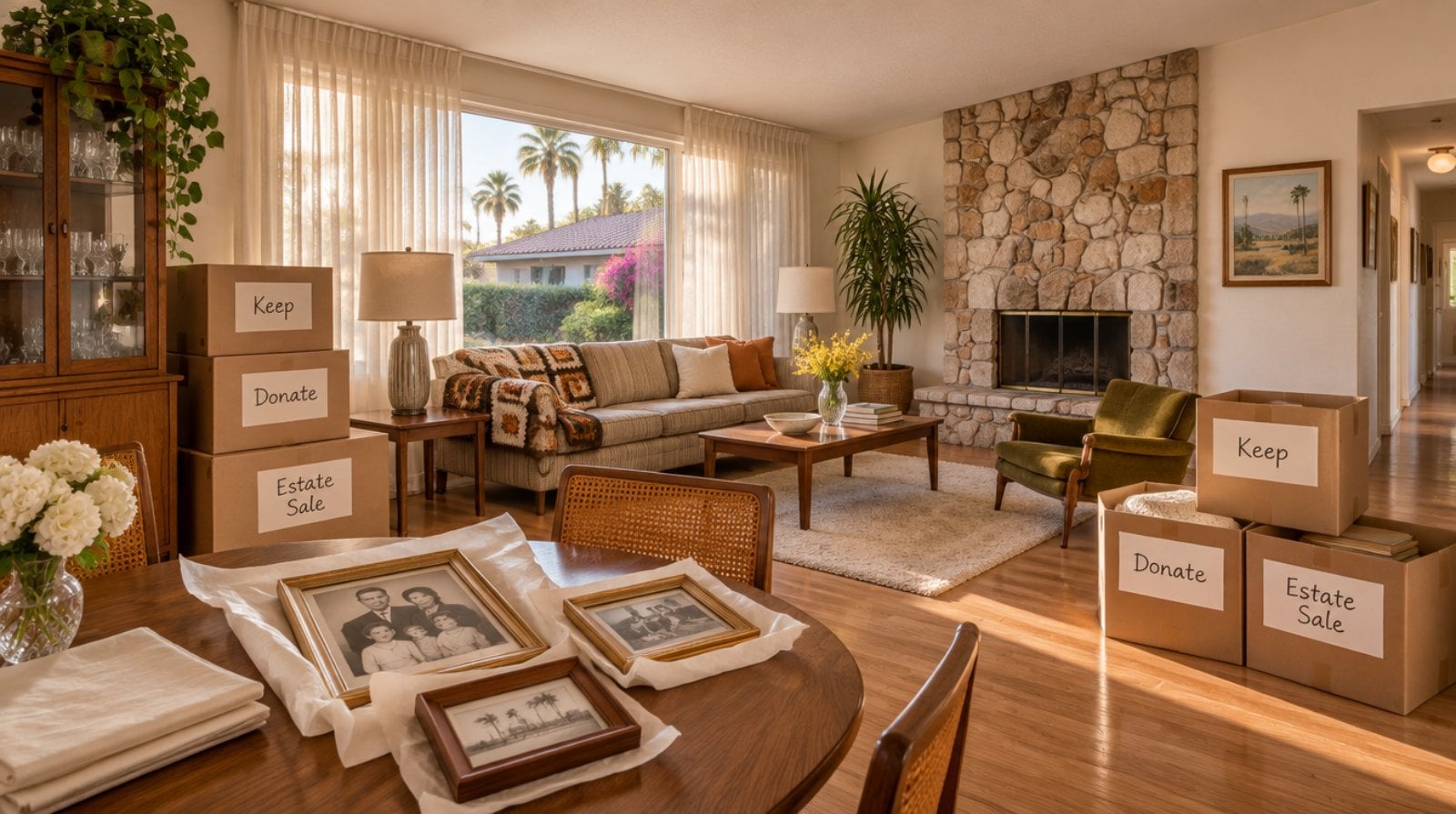
An estate cleanout before selling a parent’s house usually follows this order: secure the home, wait until the personal representative or trustee has authority, set aside documents, valuables and keepsakes, divide items among family, hold an estate sale or arrange donations, bring in a cleanout crew for what is left, then deep clean and make only the repairs that pay off before listing. If time or distance is an issue, the home can also be sold as-is with contents. In Brea, Chino Hills, Diamond Bar and surrounding areas, a local agent can coordinate the vendors for you.
Clearing out a parent’s home is often the hardest part of settling an estate. It is physical work, it is emotional, and it usually has to be coordinated among siblings who may live in different cities. The good news: an estate cleanout follows a fairly predictable order, and doing things in that order protects the family, the estate and the eventual sale price.
Last updated: November 2026
I’m Jack Ma, a REALTOR® with Century 21 Masters. I help personal representatives, trustees and families with the real estate side of probate and trust sales, including coordinating clean-out crews, estate sale companies and contractors. This guide walks through what is involved, from the first walk-through to the day the home is ready to list.
What should you do before cleaning out a parent’s house?
Before anything leaves the home, take care of three things:
- Secure the property. Change or rekey the locks, close and lock windows, and limit who has keys. Vacant homes attract trouble, and items can go missing in the first few weeks.
- Call the insurance carrier. Let the homeowner’s insurance company know the owner has passed away and the home may be vacant. A vacant home may need different coverage.
- Confirm who has authority. In a probate, the court-appointed personal representative manages the estate. If the home is in a living trust, the successor trustee does. Belongings are part of the estate, so it is safest not to remove, sell or give away items until that person has authority and the family has agreed on a plan. Your probate or trust attorney will confirm the timing.
Not sure whether the house will go through probate or a trust? See Selling a House in Probate or Trust in California and How a Successor Trustee Sells a House in California.
What should the family look for before anything is removed?
Do a careful first pass before any sale or cleanout crew arrives. Families regularly find important items in unexpected places: inside books, freezer bags, coat pockets, garage cabinets and old purses.
- Paperwork: the original will or trust, deeds, property tax bills, insurance policies, bank and brokerage statements, mortgage statements, titles for cars, and recent tax returns. Hand estate documents to the personal representative or trustee and your attorney.
- Valuables: jewelry, cash, coins, watches, art and collectibles. Photograph and list them before they move.
- Keepsakes: photos, letters, recipes, home videos and family heirlooms. These rarely have resale value but can never be replaced.
- Digital items: computers, phones and hard drives may hold photos and account records. Do not wipe or donate them until the family decides.
- Items that need special handling: firearms and ammunition, prescription medications, paint, chemicals, propane and batteries. Ask your attorney before moving firearms, and use your county’s household hazardous waste program for chemicals.
How do you divide belongings among family without conflict?
Most sibling disagreements are about fairness and feelings, not money. A simple process helps:
- Agree on the rules first. Decide how choices will be made (for example, taking turns in rounds) before anyone walks through the house.
- Use the will or trust. If it names specific items for specific people, those come first.
- Tag and photograph. Use colored stickers or a shared photo list so out-of-town family can choose too.
- Set a deadline. Give everyone a date to claim items and arrange pickup or shipping. Anything unclaimed goes to the estate sale or donation.
- Write it down. A short list of who took what helps the personal representative or trustee keep the accounting clean.
If heirs disagree about the house itself, read Do All Heirs Have to Agree to Sell Probate Property in California? and bring the question to your attorney.
Estate sale, donation or cleanout: which makes sense?
Most homes use a mix of all three. Here is how they compare:
| Option | Best when | How it usually works |
|---|---|---|
| Estate sale | There is good furniture, collectibles, tools or quality household goods | A company stages, prices and runs a sale, usually over a weekend, and is typically paid a commission on what sells. Get the terms, timing and cleanup policy in writing. |
| Donation | Items are usable but not worth selling | Charities may pick up furniture and household goods. Keep receipts for the estate’s records and ask your CPA about any tax treatment. |
| Cleanout | What is left has little value, or time is short | A crew removes everything remaining, often in a day or two, and hauls it to donation, recycling or disposal. |
A common order is: family keepsakes first, then the estate sale, then a donation pickup, then the cleanout crew for whatever remains.
What does an estate cleanout involve?
A professional estate cleanout crew empties the home room by room, including the garage, attic, sheds and yard. Good crews separate items for donation and recycling instead of sending everything to the landfill, and they sweep out each room when they finish.
What affects the price of an estate cleanout:
- How much is in the home (often quoted by volume or truckloads)
- Stairs, long carries, tight access or a full garage and attic
- Heavy or special items: pianos, safes, hot tubs, appliances, construction debris
- Hazardous items that need separate disposal
- How quickly you need it done
Get two or three written quotes after the company sees the home, confirm they are licensed and insured, and ask what happens to donated items. The personal representative or trustee should approve each job and keep the invoices for the estate’s records.
Free download: The California Probate Property Checklist
39 plain-English steps across 7 phases, from securing the home and preparing the property to closing escrow, plus the questions to bring to your attorney.
What should you fix after the cleanout, and what can you skip?
Once the home is empty, you can finally see its real condition. Not every repair pays for itself. In general:
- Usually worth it: a deep clean, hauling yard debris, fresh neutral paint in worn rooms, replacing broken fixtures, fixing obvious leaks and safety items, and simple landscaping cleanup.
- Often worth discussing: carpet replacement, new flooring in a few rooms, and minor kitchen or bath refreshes. These depend on the price range and what competing homes look like.
- Usually skip: full remodels, room additions and major projects. Buyers of estate homes often expect to update, and big projects add time, cost and risk.
Before spending money, compare the likely sale price as-is and after targeted repairs. A net proceeds analysis shows what the estate would actually take home in each scenario.
Can you sell the house as-is with the contents still inside?
Yes. Some families do not have the time, budget or energy for a full cleanout, especially when they live far away. An as-is sale with contents is usually to a cash or investor buyer and can be simpler and faster. The tradeoff is price: an empty, clean home typically reaches more buyers and shows better online.
The right choice depends on the estate’s goals and the numbers. I’ll lay out both paths side by side so the family can decide with clear information. You can also read about selling a home quickly.
How long does it take from cleanout to listing?
Every home is different, but a typical sequence looks like this:
| Stage | What happens |
|---|---|
| First walk-through | Secure the home, find documents and valuables, photograph rooms |
| Family sorting | Claim keepsakes and assigned items by an agreed date |
| Estate sale (optional) | Company preparation plus the sale itself, depending on its schedule |
| Donations and cleanout | Charity pickup, then the crew clears what remains |
| Cleaning and light repairs | Deep clean, paint, fixes and yard work |
| Photos and listing | Professional photos, pricing and launch, timed with your attorney |
Many families plan for several weeks from start to listing. In a probate, the legal timeline (Letters, notices and any court confirmation) runs alongside this, so your attorney’s schedule matters too.
What if you live out of the area?
A lot of the families I work with live in another city or state. You do not need to fly in for every step. I act as the local eyes and ears for the property: regular drive-by checks with photo updates, meeting vendors, managing access, and checking the work before anyone is paid. The personal representative or trustee approves each job, and I send written updates every week.
Learn more about how I help on the Probate & Trust Real Estate Services page.
What is the inherited home worth right now?
Before deciding how much to invest in cleanout and repairs, it helps to know the home’s value. Get an instant estimate below, then I can follow up with a detailed review of recent sales in Diamond Bar, Chino Hills, Brea and surrounding areas.
Facing a full house and not sure where to start?
Book a no-cost, no-obligation 15-minute call. I’ll walk through the home with you, line up the right vendors and show you the as-is and prepared-to-sell options.
Or call (909) 610-5188 · [email protected]
Frequently Asked Questions
When can we start cleaning out a parent’s house after they pass away?
Secure the home right away, but wait to remove, sell or give away belongings until the personal representative (in probate) or the successor trustee (in a trust) has authority and the family has agreed on a plan. Your probate or trust attorney can confirm when that authority is in place.
Should we hold an estate sale or just do a cleanout?
An estate sale makes sense when the home has furniture, collectibles or household goods that buyers will pay for. If most items have little resale value, donations plus a cleanout crew is usually faster and simpler. Many families do both: estate sale first, then donations, then a final cleanout.
How much does an estate cleanout cost?
It depends on the volume of items, the size and access of the home, and whether there are hazardous or heavy items to remove. Get two or three written quotes after the company sees the home. Estate sale companies are often paid a commission on what sells, so ask for the terms in writing.
Do we have to clean out the house before selling it?
No. A house can be sold as-is with contents, often to a cash or investor buyer. An empty, clean home usually appeals to more buyers and photographs better, so it is worth comparing the likely net result of both options before deciding.
How long does it take to go from cleanout to listing?
It varies with the amount of belongings and the repairs needed. A simple cleanout can take a few days; an estate sale usually needs time to prepare and a sale weekend; light repairs and cleaning add more. Many families plan for several weeks from start to listing.
Can someone handle the cleanout if we live out of state?
Yes. A local agent can act as your eyes and ears: meet vendors, manage access, check the work and send photo updates, while the personal representative or trustee approves each job.
Related Reading
- Selling a House in Probate or Trust in California
- How a Successor Trustee Sells a House in California
- Inheriting a House in California: Mistakes to Avoid
- Inherited a House With a Mortgage in California
- Free California Probate Property Checklist
- Probate FAQ & Glossary
About the Author
Jack Ma is a REALTOR® and Broker Associate with Century 21 Masters (DRE #01869426), licensed since 2009 with more than 300 homes sold. He helps personal representatives, trustees and families with the real estate side of probate and trust sales across Brea, Chino Hills, Diamond Bar and surrounding areas, coordinating clean-outs, repairs, vendors, marketing and escrow. He completed the C.A.R. Probate & Trust Certification in 2020 and works in English and Mandarin.
Book a 15-minute call · (909) 610-5188 · Probate & Trust Services
This article is general information, not legal or tax advice. Jack Ma is a licensed real estate broker, not an attorney or CPA. Questions about legal authority, court procedure, beneficiaries, firearms, donations and taxes should be reviewed with your probate or trust attorney or CPA. Vendor pricing and timelines vary. Equal Housing Opportunity.

FACEBOOK 1: Clearing out a parent’s home is often the hardest part of settling an estate. Here is the order that protects the family and the sale: secure the home, find documents and keepsakes, estate sale or donations, then the cleanout crew, then only the repairs that pay off. Full guide: https://jackmarealestate.com/estate-cleanout-before-selling-parents-house-california/
FACEBOOK 2: Estate sale, donation or cleanout? Most homes use all three, in that order. I put together a plain-English guide for families in Brea, Chino Hills, Diamond Bar and surrounding areas, including what affects cleanout costs and what you can skip before listing. https://jackmarealestate.com/estate-cleanout-before-selling-parents-house-california/
FACEBOOK 3: Live out of state and handling a parent’s house in Southern California? You don’t need to fly in for every step. I coordinate cleanout crews, estate sale companies and contractors, check the work, and send photo updates every week. Here’s how the process works: https://jackmarealestate.com/estate-cleanout-before-selling-parents-house-california/
LINKEDIN: Estate cleanouts are where many probate and trust sales stall. A clear order (secure, sort, sell or donate, clean out, targeted repairs) keeps families moving and protects the estate’s net proceeds. New guide for personal representatives, trustees and the attorneys who advise them: https://jackmarealestate.com/estate-cleanout-before-selling-parents-house-california/