
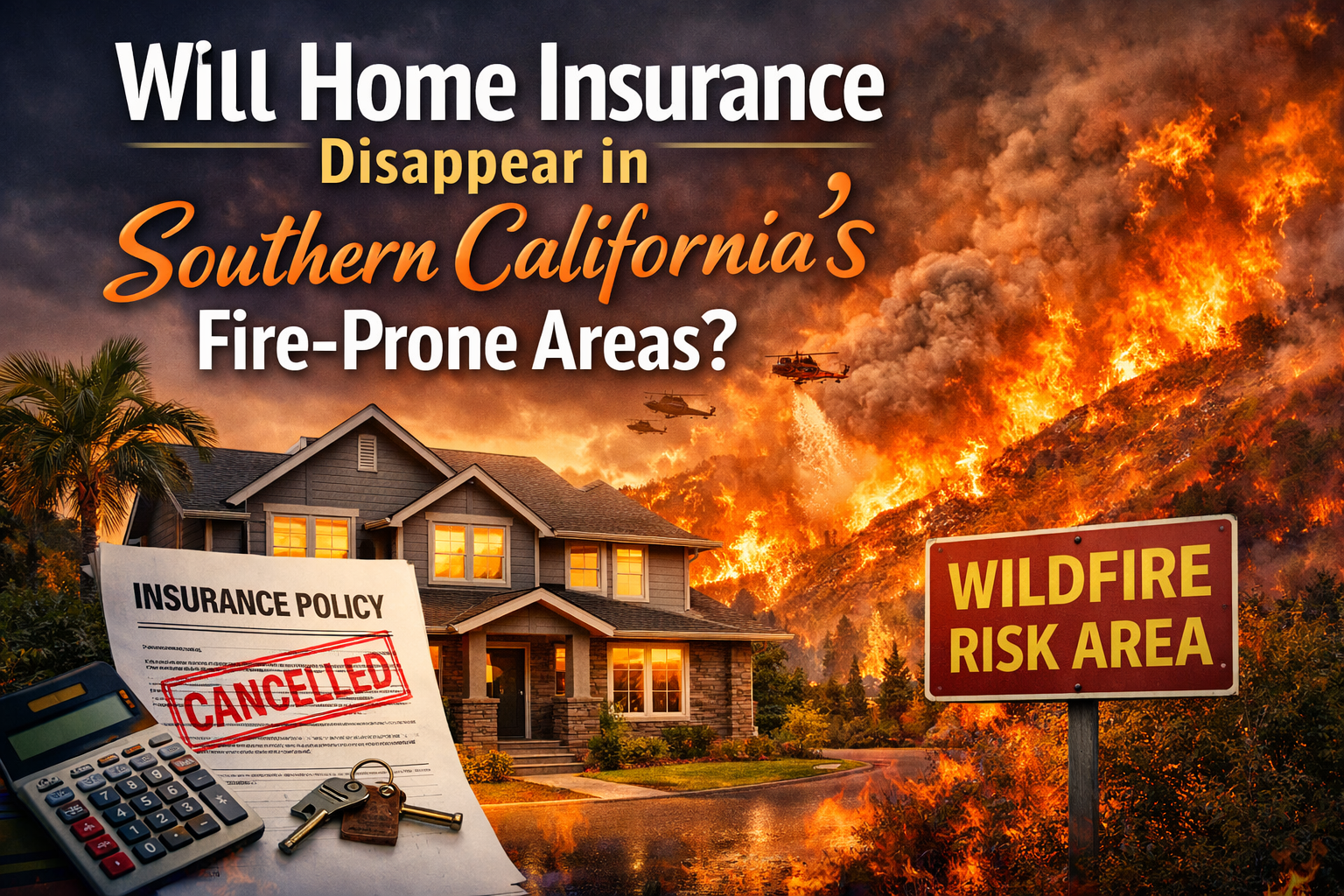
California’s insurance market is in turmoil. In recent years, massive wildfires and extreme weather have driven insurers to sharply raise premiums or pull out of riskier neighborhoods. For example, the 2025 Los Angeles wildfires alone destroyed over 15,400 homes and caused roughly $35.7 billion in losses. These losses have led many carriers to hike rates (some homeowners have seen 300%+ increases) or cancel policies in fire-prone zones. In places like Pacific Palisades and Altadena, insurers declined to renew thousands of home policies even before the latest fires. Facing surging rates and dwindling options, many Californians now wonder: Will it soon become impossible to get homeowners' insurance in Southern California’s wildfire areas?
What Is Driving California’s Home Insurance Crisis?
California’s home insurance crisis stems from a toxic mix of intense wildfire losses, rising rebuilding costs, and old regulations. In 2018, the Camp Fire (near Chico) caused $16.5 billion in insured losses and triggered emergency non-renewal bans. In recent years, the problem has intensified. As one analysis explains, a state insurance crisis occurs when insurers “significantly reduce coverage availability, raise premiums to unsustainable levels, or exit the market entirely”. All these factors are playing out in California today.
Wildfires are larger and more frequent due to climate change. One study found that, in central and northern California, the area burned by summer fires has grown 500% over recent decades, virtually all due to a warmer climate. At the same time, more people have built homes in the wildland-urban interface (WUI), the fire-prone fringe of development bordering wildlands. These trends mean insurers now expect far higher “catastrophe exposure” in California. For example, two of the nation’s largest carriers, State Farm and Allstate, recently announced they would stop writing many new policies in California, citing rapidly growing catastrophe exposure. State Farm alone dropped coverage on over 1,500 homes in Pacific Palisades during 2023.
On top of climate risks, rebuilding costs (materials, labor) have soared. Homeowners must pay far more for repairs, and insurers pay out much larger sums after a fire. Many carriers cite these mounting losses as reasons to limit their footprint in high-risk areas. In 2023 there were 23 separate U.S. disasters with over $1 billion in losses each, straining insurer balance sheets. Inflation also drives up rebuilding costs and insurance claims. Together these factors have squeezed profits and led carriers to tighten underwriting or exit parts of the California market.
Finally, California’s insurance regulations historically limited how insurers can price wildfire risk. Until late 2024, companies were not allowed to use advanced catastrophe models to set rates and could only base premiums on past losses. They also could not pass through the full cost of expensive reinsurance. In effect, insurers were forced to rely on outdated data while climate-driven risks surged. Many in the industry argue that this made California less profitable than other states, contributing to their exit. (In 2024, regulators struck a deal: insurers now may use modern risk models and raise rates on high-risk homes, but in return, they must offer coverage in wildfire zones. It remains to be seen if this will stem the exodus.)
Why Are Insurers Leaving California?
Practically speaking, many major insurers are pulling out of the California home market. For example, AIG, Allstate, Chubb, Farmers, Liberty Mutual, Mercury, and State Farm have all announced limits on new business or mass non-renewals. According to one industry report, seven of the 12 largest U.S. insurers either paused or restricted writing new California home policies in 2023. In Southern California this has hit luxury neighborhoods especially hard: Chubb quit writing new policies for high-value homes by 2021, and Allstate stopped new home sales statewide in 2022. Just before the 2024-25 fire season, State Farm announced it would not renew about 30,000 home and condo policies in California (including roughly 1,626 in Pacific Palisades).
In practical terms, insurers say they are leaving because of rising catastrophe losses and limited ability to price for that risk. As an insurance expert put it, companies “will lose a fortune if they’ve written policies cheaply because they used historical data” in a hotter, drier climate. In other words, the expected future wildfire risk is now far above California’s century-old rate-setting assumptions. Without a way to fully account for current risk, carriers prefer to shrink exposure. The result: non-renewals have surged. Between 2015 and 2024, nearly 7.6 million California home policies were not renewed statewide, and some high-risk neighborhoods saw up to 20% of homes lose their private coverage.
One recent review highlights how insurers’ retreat has transformed markets: in the Palisades (Los Angeles) example, State Farm dropped 1,600 policies in 2024, and many remaining owners turned to the FAIR Plan. In Malibu and other fire zones, homeowners report that insurers either sharply raised rates or declined renewals entirely. In fact, as one homeowner observed after a 30% rate hike, “They’re going through it in Northern California, Santa Barbara, San Diego… So it’s not just us”. Across California, Liberty Mutual informed 17,000 customers in 2024 that their homeowner fire policies would not be renewed. These waves of policy cuts have left many residents with only the last-resort FAIR Plan (see below) or no coverage at all.
The Impact on Homeowners and Homebuyers
The insurance crunch is hitting homeowners hard. Premiums have spiked, forcing many families to dig deep or reduce coverage. Some homeowners report cutting back on savings or even forgoing insurance entirely because they cannot afford the new rates. For those who keep coverage, options have narrowed. In high-fire-risk areas (e.g. Los Angeles foothills, Napa Valley, San Bernardino), small carriers or surplus-line insurers may be the only private option, often at volatile rates. In many California communities, one out of five homes has already lost standard coverage. When policies are canceled, mortgage lenders typically require forced-placed insurance: a sparse, lender-controlled policy that usually costs far more and covers much less.
Homeowners who rely on insurers of last resort face their own challenges. Those forced into California’s FAIR Plan, the state-mandated “insurer of last resort,” receive bare-bones fire-only coverage. For example, an AP profile showed one wildfire survivor on the FAIR Plan who paid a $2,000 annual premium but had a policy cap of only about $686,000 (including just $100,000 for living expenses). By contrast, his neighbor with a private policy got up to $1.5 million in rebuilding coverage. The FAIR Plan covers fire damage only; homeowners then often buy a separate “wrap-around” policy for risks like burglary, liability, water leaks, etc adding even more cost. Many find the FAIR Plan to be a temporary safety net that still leaves them underinsured by millions.
The shortage of insurance is also affecting real estate markets. Some buyers are hesitant to purchase in known fire zones, knowing they will face high insurance costs or limited options. Lenders may balk at properties that cannot be insured. Conversely, sellers find it harder to market homes once insurers label a neighborhood as high-risk. In parts of Los Angeles County, regulators even imposed a one-year moratorium on non-renewals in the worst fire areas (Pacific Palisades and the Eaton Fire zone) to prevent a sudden coverage collapse. This underscores how severe the situation has become: insurers had already been cancelling policies en masse, and the state had to step in to keep people insured.
Buying Homes in Wildfire Risk Areas
If you are buying a home in a wildfire risk area, you must plan carefully. Insurance will likely be a key part of your budget and due diligence. First, expect to shop around: work with an insurance broker well before closing so there’s time to find available carriers. Check whether a home qualifies for discounts under California’s fire safety rules. For example, the “Safer from Wildfires” law allows insurers to offer premium credits for fire-resistant roofs, cleared defensible space, and other hardening measures. A house with a good roof, maintained landscaping, and compliant firebreaks is more likely to get covered at a reasonable price. Some insurers are even using drones to inspect properties for fire hazards; simple steps like removing debris or old vehicles can make a difference.
Second, understand the FAIR Plan as the backup. If you cannot obtain a standard policy, the FAIR Plan will insure you (by law) but only for fire and only after you exhaust standard markets. This means you’ll have to consider supplemental coverage for other risks. Be prepared for higher premiums: FAIR Plan rates are often above-market and designed to reflect true fire risk. Ideally, you’d eliminate the need to use the FAIR Plan by working with a willing insurer (some smaller carriers still offer wildfire home policies) or by improving the home’s fire resilience so insurers view it more favorably.
Finally, factor insurance into your financial calculus. A home in a Santa Monica Mountains or foothill area might have a lower purchase price than one in the city, but if insurance costs $10,000–$20,000 per year, your effective cost of ownership skyrockets. Mortgage lenders will require insurance, so inability to secure a policy could block financing. The good news is that state laws are beginning to help: new regulations allow risk-based premiums (so safer homes can save money) and even offer grants for installing fire-safe roofs or other mitigation under the California Safe Homes Act. But these programs are just rolling out. Until insurers regain appetite for wildfire zones, buyers must be proactive.
California FAIR Plan Insurance
California’s FAIR (Fair Access to Insurance Requirements) Plan is the insurer-of-last-resort when you cannot find a private homeowner policy. It is a state-mandated pool, operated by insurance companies, that provides a basic fire insurance policy to anyone who needs it. The FAIR Plan only covers fire (and smoke), no liability, theft, or most other perils, although you can buy a separate “Difference in Conditions” policy to fill gaps. Because it is only fire coverage, the FAIR Plan’s premiums are higher per dollar insured compared to typical homeowners' insurance.
The FAIR Plan’s enrollment has surged as private insurers have withdrawn. By the end of 2024, it covered about 452,000 policies statewide, more than double its 2020 count. Its total insured value ballooned to roughly $450 billion in residential property. This massive growth reflects thousands of Californians who had no other choice. Commissioner of Insurance Ricardo Lara has warned that this trend strains the FAIR Plan’s finances; even before the latest fires, observers worried the insurer-of-last-resort could run out of reserve funds after a few bad fires. To address that, new law (the FAIR Plan Stability Act) now allows the plan to access catastrophe bonds and other capital to pay claims.
In practice, the FAIR Plan is a stopgap, not a long-term solution. It is designed “as a temporary safety net until policyholders find a more permanent option”. State officials are actively trying to get homeowners off the FAIR Plan and back into private coverage for fuller protection. Insurance Commissioner Lara’s office has even banned cancellations in some hard-hit zones to keep people in traditional policies. But until the market stabilizes, many wildfire-area homeowners are living on the FAIR Plan with only the most basic cover. (One homeowner quoted the FAIR Plan’s nickname: “It’s just the UnFAIR plan,” reflecting the frustration of high costs and limits.)
Home Insurance Availability in California
To answer the original question: as of now, home insurance in Southern California wildfire zones is extremely scarce but not literally impossible. Coverage still exists, but it’s confined to either very high premiums with admitted carriers or the FAIR Plan. According to industry data, by late 2024 about one in seven homes in Pacific Palisades was on the FAIR Plan. In other words, the majority still had private insurance (often through smaller or surplus insurers), but a significant minority could only insure through the FAIR Plan. Across the state, tens of thousands of homeowners have been dropped this year, and many more will face steep increases at renewal.
Some insurers remain active in the market. For example, Mercury Insurance, State Farm, and others did renew and sell policies last year in certain areas, but only if homeowners met strict conditions (like having good fire-hardening measures in place). Insurers now check things like roof material, ember-resistant vents, and cleared brush before offering coverage. If your home meets those standards, you may find a carrier, but expect to pay more. If not, your options narrow to the FAIR Plan or being uninsured.
Importantly, state reforms are aiming to expand availability. Starting in 2025, insurers were allowed to raise rates more in high-risk areas if they also write new business there. And new consumer laws offer wildfire safety grants, expanded insurance discounts for fire-hardening, and extra financial backing for the FAIR Plan. These steps should gradually improve conditions. But change is slow, and insurers have been cautious.
In summary: insurance in these fire-prone parts of Southern California is hard to get but not yet impossible. It requires diligence: shop early, consider multiple carriers (including surplus lines), invest in home hardening measures, and be prepared for the FAIR Plan as a fallback. The situation is evolving, but for now homeowners and buyers alike must plan carefully.
Looking Ahead: Securing Your Home’s Future

The California insurance crisis will not solve itself overnight. Wildfires and climate pressures are real and growing, and the insurance market is adjusting. Homeowners in fire-risk areas face tough choices, but they can respond proactively. Keep up fire-safe maintenance on your home, explore all available coverage options, and stay informed about state support programs. Remember that good risk-mitigation (like clearing brush and retrofitting roofs) can pay off in better insurance terms.
In the bigger picture, insurers and regulators have started to address the breakdown. New laws will inject capital into the FAIR Plan, require insurers to cover protected homes, and speed claim payments for wildfire victims. If these measures work as intended, they may ease the crisis in coming years. But for now, buyers and homeowners in Southern California must be especially vigilant. When considering a property, always factor in insurance availability and costs as you would property taxes or neighborhood safety.
Although this insurance crunch poses serious challenges, it does not mean homeownership in SoCal’s fire zones must be abandoned. With planning and the right expertise, you can still find a way to protect your home. The risks are high, but so are the rewards of living in California’s beautiful landscape. Staying proactive, trimming vegetation, upgrading home hardening, and keeping insurance quotes current will help ensure you aren’t left unprotected.
Partner with Jack Ma Real Estate to Weather the Storm
Secure Your Future with Confidence. Dealing with California’s home insurance turmoil can be stressful, but you don’t have to go it alone. Jack Ma Real Estate Group specializes in Southern California properties and understands the local wildfire challenges. Jack and his team will help you identify homes with strong fire-safety features and guide you through the insurance process. They can connect you with knowledgeable brokers and discuss options like defensible-space upgrades or the FAIR Plan if needed. By staying informed and working with an experienced local agent, you can find a home that you can insure and protect. Don’t let insurance headaches derail your home-buying dreams . Contact Jack Ma Real Estate today for expert advice and peace of mind in this challenging market.
Frequently Asked Questions
Q: What is causing California’s home insurance crisis?
A: The California home insurance crisis is largely driven by larger and more frequent wildfires, rising rebuilding costs, and stricter insurance regulations. These factors have increased losses for insurers, leading many companies to raise premiums or reduce coverage in wildfire-prone areas.
Q: Why are insurers leaving California?
A: Many insurers cite growing wildfire losses, higher construction costs, and regulations that limited how they priced risk. These factors explain why insurers are leaving California or reducing new policies in areas with higher fire danger.
Q: What is the California FAIR Plan insurance?
A: California FAIR Plan insurance is a state-backed program that offers basic fire coverage to homeowners who cannot get traditional insurance. It is meant to be a last-resort option and usually requires homeowners to buy additional policies for broader protection.
Q: Can I still buy homeowners insurance in Southern California wildfire zones?
A: Yes, but it may be more difficult and expensive. Some insurers still offer Southern California wildfire insurance, but many homeowners in high-risk areas rely on limited options like the FAIR Plan.
Q: What should buyers consider when purchasing homes in wildfire risk areas?
A: When buying homes in wildfire risk areas, buyers should check insurance availability, review wildfire risk maps, and consider homes with fire-resistant features such as defensible space and fire-resistant roofing.
Check out this article next