

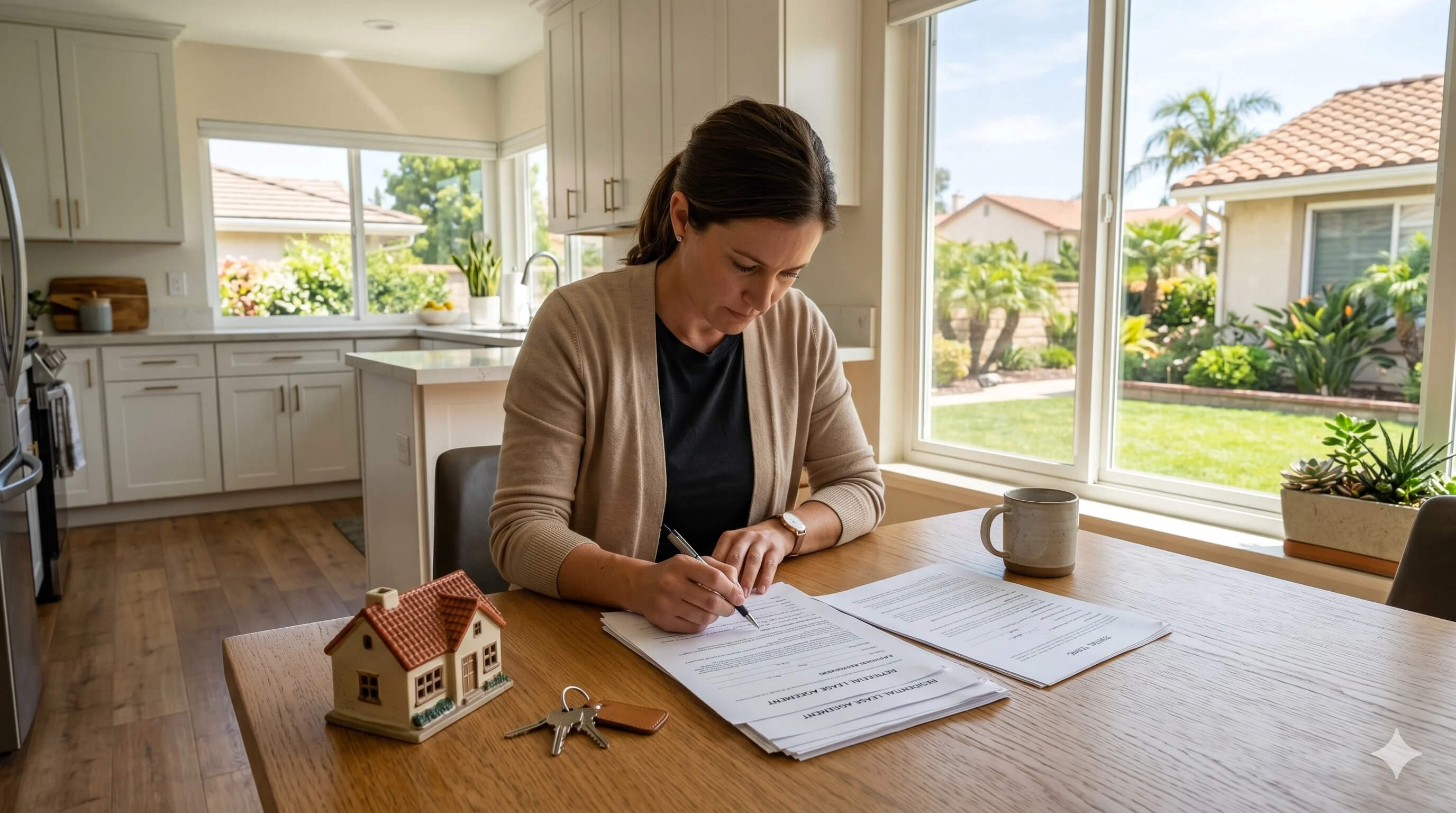
If you own a rental property in Diamond Bar, Walnut, Chino Hills, Rowland Heights, Brea, Fullerton, Yorba Linda, or anywhere across the East San Gabriel Valley, Chino Valley, or North Orange County — there is a good chance you have been asking yourself this question at some point in 2026.
Should I keep this rental property — or should I just sell it?
It is not a simple question. And any answer that does not start with your specific numbers is not worth much. But there is a clear framework for thinking through it — and most landlords in the San Gabriel Valley and North Orange County are either missing key data or asking the wrong question entirely.
This post walks through the decision honestly. Not to push you toward selling, and not to convince you to hold forever. Just to help you think through it clearly before you commit either way.
Quick Answer
Keeping your rental makes sense when your cash flow is positive, your tenant relationship is stable, and your long-term equity outlook is strong. Selling makes sense when you are locked into below-market rents under AB 1482, your net cash flow is negative after all expenses, or your equity has grown to the point where selling now produces a better financial outcome than holding for another 5 to 10 years. The only way to know which applies to you is to run the actual numbers — not guess.
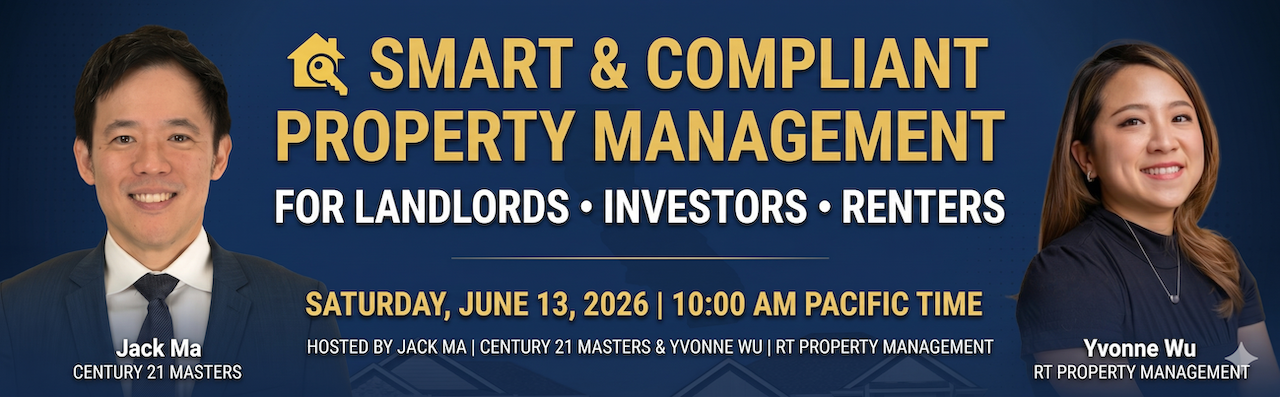
Saturday June 13, 2026 | 10:00 AM Pacific | Free Zoom | Jack Ma + Yvonne Wu (RT Property Management)
The San Gabriel Valley and North Orange County Rental Market in 2026 — What the Numbers Say
Before deciding whether to keep or sell, you need to understand what your property is actually worth right now and what the rental market looks like for your specific city.
| City | Median Home Value | Typical SFR Rent | Gross Yield |
|---|---|---|---|
| Diamond Bar | ~$988K–$1.05M | $3,000–$4,000/mo | ~3.4–4.6% |
| Walnut | ~$1.16M–$1.3M | $3,200–$4,200/mo | ~3.1–4.3% |
| Chino Hills | ~$960K–$1.02M | $2,800–$3,800/mo | ~3.3–4.7% |
| Rowland Heights | ~$850K–$950K | $2,800–$3,600/mo | ~3.5–5.1% |
| Brea | ~$850K–$950K | $2,800–$3,600/mo | ~3.5–5.1% |
| Fullerton | ~$800K–$900K | $2,600–$3,400/mo | ~3.5–5.1% |
| Yorba Linda | ~$1.0M–$1.2M | $3,200–$4,200/mo | ~3.2–5.0% |
Gross yield = annual gross rent ÷ property value. Net yield will be lower after expenses. Data for illustrative purposes — contact Jack Ma for a property-specific analysis.
At first glance these gross yields look reasonable. But gross yield is the wrong number to evaluate. What matters is your net cash flow after all expenses — and for many San Gabriel Valley and North Orange County landlords, that number tells a very different story.
The Real Cash Flow Calculation — What Most Landlords Get Wrong

Most landlords calculate their cash flow like this: Monthly rent minus mortgage payment = cash flow
That is not cash flow. That is a number that ignores roughly half your actual costs. Here is the complete picture:
| Expense | Typical Monthly Cost |
|---|---|
| Mortgage (PITI) | $3,500–$6,500 depending on loan balance |
| Property management (if applicable) | 8–10% of gross rent ($240–$400) |
| Vacancy reserve (5–8%) | $150–$300 |
| Maintenance and repairs reserve | $150–$300 |
| Insurance | $150–$250 |
| Capital expenditure reserve (roof, HVAC, etc.) | $100–$200 |
| Total non-mortgage expenses | ~$790–$1,450/month |
For a Diamond Bar rental generating $3,500/month in rent with a $4,200 mortgage payment — the true net cash flow is approximately negative $1,500 to negative $2,000 per month before taxes. That is not a cash flow property. That is an appreciation play.
There is nothing wrong with an appreciation play — if you understand that is what you are holding and if the long-term equity outlook justifies the monthly carrying cost. But many San Gabriel Valley landlords are surprised when they run the real numbers.
The AB 1482 Factor — When Rent Control Changes the Math
California’s AB 1482 Tenant Protection Act applies to most residential rental properties in California that are more than 15 years old. It caps annual rent increases at 5% plus the local CPI — with a maximum of 10% per year.
For San Gabriel Valley and North Orange County landlords, this creates a specific problem: if your tenant has been in place for 3, 5, or 10 years and their rent started below market — AB 1482 severely limits how quickly you can reset to current market rates.
This is the rent trap. And it is one of the most common reasons San Gabriel Valley and North Orange County landlords are rethinking whether to hold or sell in 2026.
AB 1482 does not apply if: your property is less than 15 years old, is a single-family home not owned by a corporation (with proper notice given), or the tenant vacates voluntarily allowing you to reset to market rent.
FREE ZOOM EVENT — JUNE 13, 2026
Smart & Compliant Property Management
For landlords, investors & renters in the San Gabriel Valley and North Orange County.
Co-hosted by Jack Ma (Century 21 Masters) + Yvonne Wu (RT Property Management).
5 Signs It Might Be Time to Sell Your Rental
1. Your cash flow is negative and has been for years
If you are consistently losing money every month after all expenses — and the equity appreciation is the only reason you are holding — ask yourself honestly: is this the best use of that equity? Could you redeploy that capital more effectively elsewhere?
2. You are locked into a significantly below-market rent under AB 1482
If your tenant is paying $500–$1,000/month below current market rent and shows no signs of leaving, the rent gap compounds every year. Selling now captures today’s peak values before that gap erodes your returns further.
3. The property needs significant capital work in the next 2–3 years
Roof, HVAC, foundation, plumbing, electrical — major capital expenditures on a negative or break-even cash flow property can be the tipping point. Selling before those costs hit may make more financial sense than spending $30,000–$80,000 on a property you were already questioning.
4. Your equity has grown substantially and you have better uses for it
A San Gabriel Valley homeowner who bought for $450,000 in 2012 and is now sitting on $1,050,000 has approximately $600,000 in equity. If that equity is generating $800/month in net cash flow — that is a 1.6% annual cash-on-cash return. There are stronger uses for $600,000 in capital.
5. Being a landlord no longer fits your life
Difficult tenants, maintenance calls, compliance complexity, and the emotional weight of managing a rental from a distance are real costs that do not show up in a spreadsheet. If the stress of being a landlord outweighs the financial benefit — that is a legitimate reason to sell.
5 Signs You Should Keep Your Rental

1. Your cash flow is positive after all expenses
If you are genuinely cash flow positive after mortgage, management, vacancy, maintenance, insurance, and reserves — you have an asset that is paying you to hold it. That is rare in the San Gabriel Valley at today’s prices. Do not give it up lightly.
2. Your tenant is stable and paying at or near market rent
A reliable long-term tenant paying market rent is one of the most valuable things a rental property can have. The cost of vacancy, re-leasing, and potential tenant issues far outweighs the inconvenience of a well-running rental relationship.
3. You have significant tax exposure if you sell
If you have owned the property for more than 10 years and have claimed depreciation, selling triggers both capital gains tax and depreciation recapture — potentially costing $150,000–$300,000+ in combined federal and California taxes. Holding defers that tax bill indefinitely. See our guide on California capital gains tax when selling real estate for more detail.
4. You have a clear long-term plan for the property
Whether that is eventually moving back in, housing a family member, leaving it as an inheritance, or building toward a 1031 exchange into a larger portfolio — a clear long-term purpose for the property is a good reason to hold through short-term cash flow challenges.
5. The tenant is likely to vacate within 12–24 months
If your below-market tenant is likely to move — and you can reset to market rent — the calculus changes dramatically. A Diamond Bar rental resetting from $2,800/month to $3,800/month adds $12,000/year in gross income. That changes the hold vs. sell decision significantly.
The Decision Framework — Three Questions to Answer First
Before making any decision, answer these three questions with real numbers:
1. What is my true net cash flow per month? Not rent minus mortgage. All expenses included.
2. What would I net after taxes if I sold today? Sale price minus mortgage payoff, selling costs, capital gains tax, and depreciation recapture.
3. What would I do with the net proceeds? If you do not have a clear answer to this — selling may not be the right move yet even if the numbers favor it.
If you want help working through these three questions for your specific property — that is exactly the kind of conversation I have every week with San Gabriel Valley and North Orange County landlords. And it is exactly what we will be covering live at our free Zoom on June 13.
Saturday June 13, 2026 | 10:00 AM Pacific | Free Zoom | Jack Ma + Yvonne Wu (RT Property Management)
Frequently Asked Questions
Should I keep my rental property in the San Gabriel Valley or sell in 2026?
It depends on your cash flow, equity position, tenant situation, and goals. Landlords with positive cash flow and stable tenants generally benefit from holding. Landlords locked into below-market rents under AB 1482 with significant equity may find selling now produces a better financial outcome. Running both scenarios with real numbers is the only way to know for certain.
How does AB 1482 affect my decision to keep or sell my California rental?
AB 1482 caps annual rent increases at 5% plus CPI (maximum 10%). If your tenant has been in place for years and their rent is significantly below market, AB 1482 limits how quickly you can reset to market rate. This can make selling — and capturing today’s elevated values — more attractive than holding for another decade at suppressed rents.
What are the tax implications of selling my rental property in California?
Selling a rental property triggers capital gains tax on appreciation plus depreciation recapture tax on any depreciation claimed. California taxes all gains as ordinary income at rates up to 13.3%. A 1031 exchange can defer these taxes if you reinvest in another qualifying property. Always consult a CPA before making a decision.
Is it a good time to sell a rental property in the San Gabriel Valley in 2026?
San Gabriel Valley home values remain near historic highs in 2026, with single-family medians between $850,000 and $1,050,000+ depending on the city. For landlords who have held since before 2020, the equity position is substantial. Whether now is the right time depends on your specific financial situation, tax exposure, and long-term goals.
What is a 1031 exchange and can I use it when selling my rental?
A 1031 exchange allows you to defer capital gains tax by reinvesting proceeds into another qualifying investment property — 45 days to identify and 180 days to close. It applies to investment properties only, not primary residences. A qualified intermediary must be engaged before the sale closes.
What if my tenant won’t leave and I want to sell?
In California, you can sell a tenant-occupied property. The tenant generally has the right to remain through the end of their lease. After the lease expires, month-to-month tenants in AB 1482-covered properties require just cause for eviction. A cash-for-keys agreement — offering the tenant a negotiated payment to vacate voluntarily — is a common and legal approach. Consult a California real estate attorney for your specific situation.
Official Sources & References
- California Civil Code Section 1947.12 — AB 1482 Tenant Protection Act
- California Department of Housing and Community Development — Renter Protections
- IRS Publication 527 — Residential Rental Property
- California Franchise Tax Board — Rental Income and Deductions
- Redfin, Movoto, PropertyShark — San Gabriel Valley Market Data Q1–Q2 2026
This post is for general informational purposes only and does not constitute legal, tax, or financial advice. Consult a qualified CPA, attorney, and financial advisor before making any investment decisions. Jack Ma | REALTOR® | DRE #01869426 | Century 21 Masters | Serving East San Gabriel Valley, Chino Valley & North Orange County